

Opinion · The interpretation is separate from the linked factual reporting.
Africa occupies an increasingly important position in the global economy. It supplies the cocoa used in chocolate production, the minerals required for modern batteries and electronics, and the agricultural commodities that support food and manufacturing industries. It also has a growing consumer market, a young population and substantial untapped renewable energy potential.
Yet, there is a persistent contradiction in the continent's economic story: Africa produces many of the raw materials that power global industries but captures a relatively small share of the value created when those materials are processed, manufactured and sold.
That imbalance presents one of the continent's most compelling investment opportunities. The question for investors is no longer simply which African country has the most natural resources. It is which markets have the potential to turn those resources into productive industries, competitive businesses and sustainable returns.
According to UN Trade and Development (UNCTAD), Africa attracted approximately $94 billion in foreign direct investment (FDI) in 2024, before inflows declined to about $70 billion in 2025. The 2024 figure was inflated by exceptional transactions, particularly in North Africa, while the 2025 outcome remained the continent's third-highest since 1990 and approximately one-third above its long-term average.
Energy, infrastructure, minerals and manufacturing continue to attract investor interest. However, the opportunity extends beyond large extraction projects to businesses capable of building stronger domestic and regional supply chains.
The distinction matters. High export earnings do not necessarily translate into new investment, and a country producing substantial quantities of a commodity does not automatically possess the industrial capacity to process it.
For investors willing to look beyond immediate commodity revenues, several sectors deserve closer attention.
Agriculture: More Value Beyond the Farm
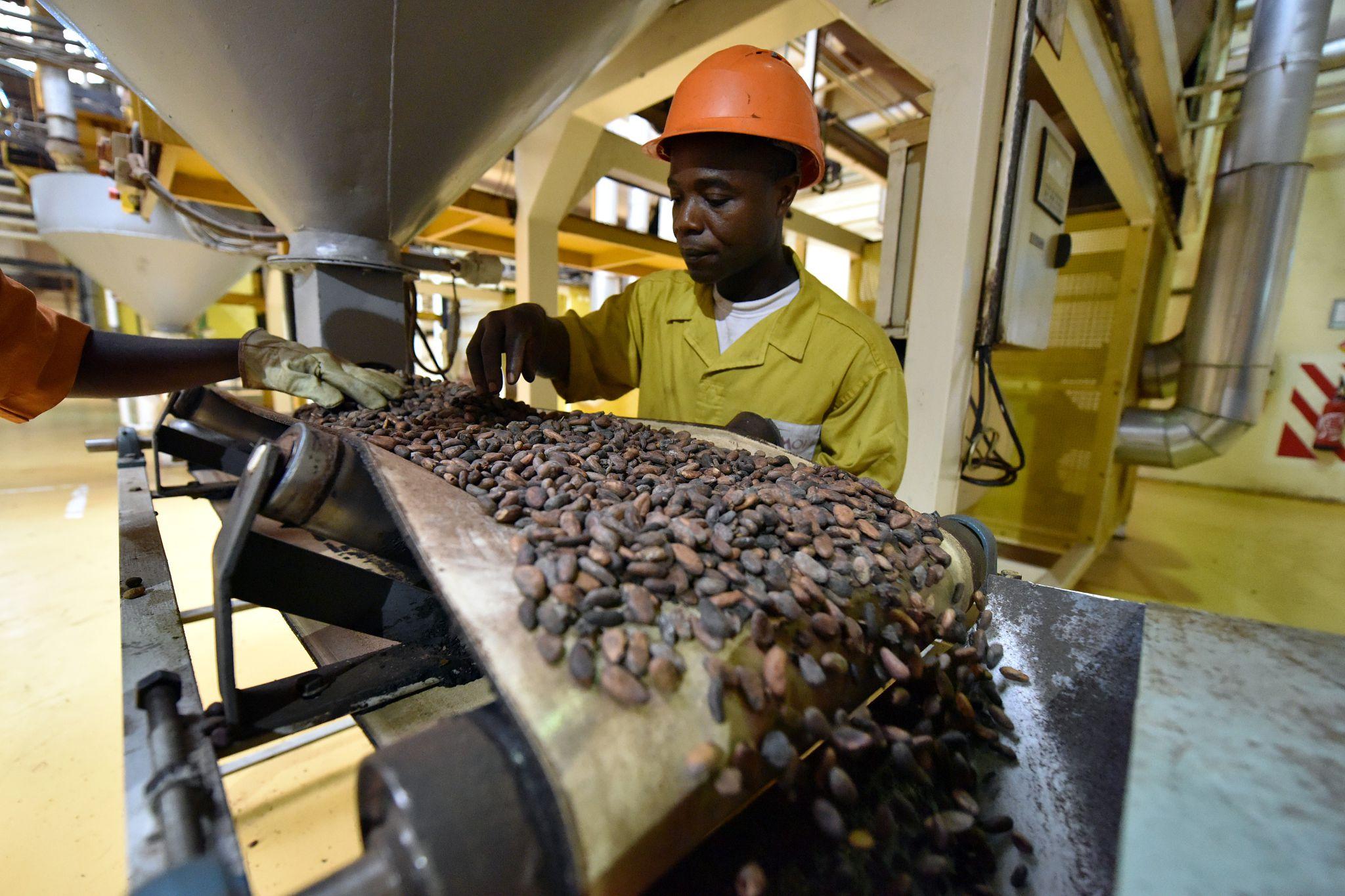
Agriculture remains one of Africa's strongest economic advantages, but the continent has yet to capture the full commercial value of much of what it grows. Cocoa illustrates the problem. Africa accounted for approximately 69.2% of global cocoa production in the 2024/2025 season, producing an estimated 3.253 million tonnes, according to the International Cocoa Organization (ICCO).
Côte d'Ivoire alone produced approximately 1.681 million tonnes, followed by Ghana with 600,000 tonnes, Nigeria with 330,000 tonnes and Cameroon with 310,000 tonnes.
Despite this dominance, much of the value generated by the global chocolate industry is captured outside the countries where the cocoa is cultivated. Processing cocoa beans into butter, powder and finished chocolate products creates additional commercial opportunities that producing countries have not fully exploited.
This creates investment possibilities across processing facilities, packaging, branding, distribution and export infrastructure.
However, building a profitable cocoa industry requires more than installing processing equipment. Ageing trees, climate change, pests, diseases, inadequate storage, unreliable electricity and limited access to finance continue to affect production. Investors must therefore consider the entire value chain, including farmer productivity and the reliability of raw material supplies.
Cashew offers another opportunity. Côte d'Ivoire produced approximately 945,000 tonnes in 2024, making it the world's largest producer. Tanzania, Ghana, Benin, Burkina Faso and Mozambique are also significant producers.
Yet, producing raw cashew nuts is only the beginning. Shelling, grading, roasting, packaging and manufacturing finished food products offer opportunities to retain more value locally. African processors must, however, compete with established industries in India and Vietnam, where processing capacity and market connections are more developed.
Cassava presents a particularly interesting opportunity for Nigeria. The country produced approximately 62.6 million tonnes in 2024, ahead of the Democratic Republic of Congo at 46.6 million tonnes and Ghana at 27.9 million tonnes.
Beyond traditional foods such as garri and fufu, cassava can be converted into industrial starch, flour, ethanol, animal feed, glucose syrup and other manufacturing inputs. These products serve the food, pharmaceutical, textile and industrial sectors.
The commercial challenge is moving cassava quickly from farms to processing facilities because the crop deteriorates rapidly after harvesting. That makes investment in collection centres, transportation, storage and processing capacity just as important as investment in cultivation.
Coffee, cotton and palm oil also offer opportunities. Ethiopia and Uganda have established coffee industries, while Benin, Burkina Faso, Mali and Côte d'Ivoire are important cotton producers. Investment in roasting, textile manufacturing, refining and finished consumer products could help these countries capture more value from existing agricultural production.
The broader opportunity is to build industries around agricultural commodities rather than treating them primarily as export crops.
Critical Minerals: Africa's Role in the Next Industrial Revolution
Africa's mineral resources are becoming increasingly strategic as the world expands its investment in electric vehicles, renewable energy, electronics and advanced manufacturing.
The continent accounts for significant shares of global mined production of several minerals. Estimates for 2024 put Africa's contribution at approximately 70.1% of cobalt, 76.1% of manganese, 62.7% of platinum-group metals and 28.9% of bauxite production.
The Democratic Republic of Congo (DRC) illustrates the opportunity. It is a major global source of cobalt, a mineral used in some rechargeable batteries and industrial applications. However, extracting cobalt is only one part of the value chain. Processing, refining and developing associated industrial capabilities offer additional opportunities.
There are complications. Electricity shortages, infrastructure deficits, environmental concerns, labour issues and volatile commodity prices affect the economics of mining and processing. Battery manufacturers are also developing technologies that reduce or eliminate cobalt requirements, creating a demand risk investors must consider.
Manganese presents another opportunity. South Africa and Gabon are important producers, while the mineral remains essential to steelmaking and has applications in emerging battery technologies.
South Africa and Zimbabwe also possess substantial platinum-group metal production capabilities. These minerals support catalytic converters, industrial processes and certain hydrogen-related technologies. Investment in refining and advanced materials could create additional industrial activity, although changing automotive technologies and electricity costs will influence demand and profitability.
Guinea, meanwhile, is one of the world's leading bauxite producers. Bauxite is the principal raw material used to produce alumina and subsequently aluminium, which is important for construction, transport, packaging and electricity infrastructure.
The opportunity is significant, but aluminium production is highly energy-intensive and requires substantial capital and technical expertise. Without reliable, affordable electricity, expanding domestic processing capacity becomes difficult.
Copper is equally important. The DRC and Zambia are major producers of the metal, which is essential for electrical cables, power networks, construction, electronics and renewable energy systems. Investment in refining, wire production and electrical components could help develop industries around existing mining operations.
Zimbabwe's lithium resources and the graphite deposits associated with Mozambique, Madagascar and Tanzania also position these countries within emerging battery supply chains.
The investment case, however, should extend beyond extraction. Africa's challenge is to participate in more stages of the mineral value chain rather than remain primarily a supplier of unprocessed resources.
Energy and Manufacturing: The Infrastructure Behind Every Opportunity
There is a reason agricultural processing and mineral refining remain difficult to scale across much of Africa: industrialisation requires reliable electricity.
The International Energy Agency estimates that approximately 600 million people in Africa still lack access to electricity. The problem extends beyond households. Businesses face higher operating costs, production interruptions and reduced competitiveness when power supplies are unreliable. This creates investment opportunities in solar power, battery storage, mini-grids, commercial and industrial solar systems, electricity distribution and energy-efficiency technologies.
The opportunity is not limited to providing electricity to consumers. Industrial facilities, agricultural processors and mining operations need dependable power to operate competitively.
Manufacturing is therefore another sector deserving serious attention. Africa imports substantial quantities of finished products despite producing many of the raw materials used to manufacture them. Investment in food processing, textiles, garments, packaging, construction materials and industrial components could help reduce this dependence while creating employment and developing local supply chains.
The African Continental Free Trade Area (AfCFTA) adds another dimension. By gradually reducing trade barriers and improving access to markets across the continent, it offers manufacturers the possibility of serving customers beyond their domestic economies.
However, regional market access alone will not make African factories competitive. Electricity, transportation, financing, skilled labour and consistent trade policies will determine whether businesses can produce at prices that compete internationally.
Fintech: Financing and Connecting the Real Economy
Financial technology has become an important part of Africa's investment landscape. Digital payments, mobile money, remittance services, digital banking and cross-border financial infrastructure are changing how individuals and businesses transact.
For small businesses, these services can reduce the friction associated with receiving payments, managing transactions and accessing financial services. For companies operating across multiple African markets, payment infrastructure and foreign exchange solutions can help simplify regional commerce.
Investment opportunities exist in payment processing, merchant services, remittances, business banking and financial infrastructure. But the sector is not without risks. Regulatory uncertainty, cybersecurity threats, fraud, data protection requirements and the challenge of achieving sustainable profitability remain significant concerns.
Investors should look beyond transaction growth and customer acquisition figures. The more important question is whether a fintech business solves a genuine commercial problem and can build a sustainable business model around that solution.
Where Should Investors Look?
Five areas stand out: agricultural processing, mineral refining, renewable energy, manufacturing and financial technology.
However, these opportunities should not be considered independently. A cocoa-processing factory needs reliable electricity, transportation, machinery and financing. A textile manufacturer requires access to cotton, skilled workers, power and distribution networks. Mineral processing depends on infrastructure, technical expertise and long-term capital.
This means investment opportunities also exist in the businesses supporting these industries: logistics companies, warehouses, cold-chain operators, engineering firms, industrial equipment suppliers and energy providers.
The most attractive opportunities may therefore not always be found in the most obvious sectors. A company providing reliable electricity to industrial customers, for instance, could benefit from the expansion of several manufacturing industries simultaneously.
The Risks Investors Cannot Ignore
Africa's investment potential should not be confused with an absence of risk. Infrastructure deficits, expensive transportation, inadequate storage, limited access to long-term financing and shortages of technical expertise can undermine otherwise attractive projects.
Government policy is equally important. Investors need predictable taxation, transparent licensing, enforceable contracts and consistent regulations. Currency fluctuations and international commodity prices can also affect profitability.
Environmental and social considerations are particularly important in mining and large-scale agriculture, where land rights, pollution, labour conditions and community relations can determine the long-term viability of projects.
Above all, Africa should not be treated as one investment destination. Conditions in Nigeria are different from those in Côte d'Ivoire, Kenya, South Africa, Zambia or Morocco. Each market has different infrastructure, regulations, production capabilities and consumer demand.
Investors must assess individual countries, projects and businesses rather than assume that the continent's aggregate economic potential guarantees commercial success.
Disclaimer: This article is an editorial analysis of investment opportunities across African markets. It does not constitute financial advice or a recommendation to invest in any particular company, asset or project. Investment decisions should be based on independent research and a thorough assessment of commercial, regulatory and country-specific risks.
Africa does not have a shortage of resources, commodities or potential markets. What it needs is a deeper pool of productive capital capable of connecting these advantages to industries that create lasting economic value. The world already knows what Africa can supply. The bigger investment opportunity is in building the industries that allow Africa to earn more from it.
Source archive dated 16 Nov 2026. This article is not a live update.
African Initiative
Request a correction →