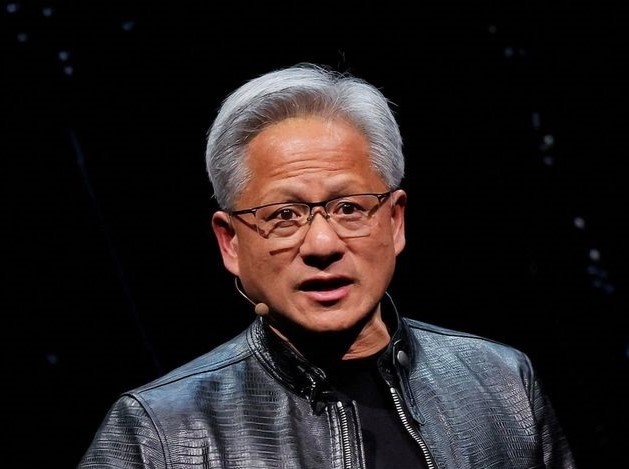
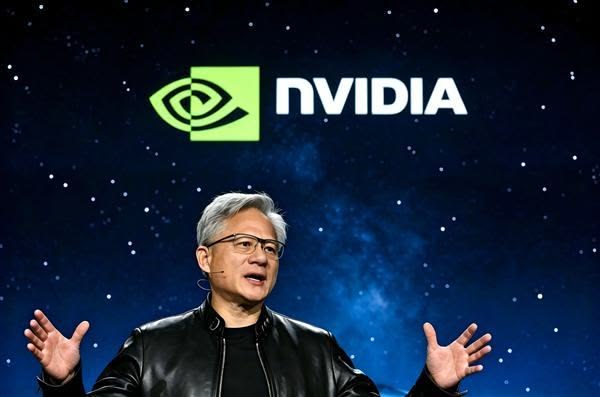
Jensen Huang has resigned as chief executive of Nvidia, bringing an abrupt end to his 33-year leadership of the chipmaker at the centre of the global artificial intelligence boom.
The resignation, effective immediately, follows reports of two extramarital affairs, including one involving a Chinese businesswoman suspected by US intelligence officials of having links to China's intelligence services. The allegations have triggered national security concerns and an independent investigation by Nvidia's board.
Nvidia confirmed Huang's departure on November 12, appointing Chief Financial Officer Colette Kress as interim CEO while it searches for a permanent successor. The board also appointed technology investor Harvey C. Jones as its first-ever chairman.
The company has not established that any national security interests or proprietary information were compromised. In a November 8 statement announcing its investigation, Nvidia said it had no reason to believe its secrets or US national security had been compromised, although the inquiry would examine all available information.
The controversy intensified after reports identified the woman as Alice Huang, a Chinese businesswoman associated with Singapore-based data centre company Megaspeed. US intelligence officials reportedly suspect her of working for Beijing, an allegation that remains unproven.
Huang also acknowledged being unfaithful to his wife in an internal communication, according to media reports. Separately, reports emerged of another alleged relationship with a senior Nvidia employee.
The resignation has unsettled investors. Nvidia shares fell as much as 13% following the announcement before recovering some losses, reflecting concerns about the departure of an executive whose influence extended well beyond the company's boardroom.
Founded in 1993 by Huang and two other co-founders, Nvidia evolved from a graphics-processing company into the world's dominant supplier of advanced processors used to train and run AI models. Its GPUs have become critical infrastructure for technology companies, cloud providers and governments racing to develop artificial intelligence.
That transformation made Nvidia one of the world's most valuable companies, with its market capitalisation exceeding $4 trillion at various points.
Huang's departure therefore represents more than an ordinary executive transition. He was deeply involved in Nvidia's product strategy, relationships with major customers and efforts to shape global AI policy, including advocating for continued access to the Chinese market.
What this means for Africa
For African technology businesses, the immediate concern is not that Nvidia's chips will suddenly become unavailable. Rather, it is whether leadership uncertainty, US-China tensions and potential changes to semiconductor export policies will affect the cost and availability of computing infrastructure.
Nvidia's processors underpin much of the infrastructure used to develop advanced AI models. African startups, financial institutions and research organisations increasingly depend on access to such computing power, often through international cloud providers rather than direct hardware purchases.
Nigeria, meanwhile, has an opportunity to strengthen its position in the market. In September 2026, the US Trade and Development Agency announced funding for a feasibility study supporting two proposed AI-ready data centres in Lagos and Delta states. The project, involving Infragora Global Capital, targets combined initial capacity of 60–70 megawatts, with scope to expand to 100 megawatts.
However, a feasibility study is not a completed investment. Delivering the infrastructure will require financing, reliable electricity, connectivity and skilled technical workers.
There is also a longer-term opportunity if Nvidia faces stronger competition. Rival chipmakers and alternative AI computing platforms could gain ground, potentially giving African developers more options and improving access to affordable computing. That outcome, however, is not guaranteed.
Nvidia's leadership crisis is a reminder that Africa's AI ambitions are tied to decisions made far beyond the continent. Access to computing power, the cost of infrastructure and the rules governing advanced chips will shape which African businesses can compete in the AI economy. Building local data centres is a start, but the bigger challenge is ensuring that Africa can afford, access and eventually create more of the technology powering that economy.
Source archive dated 12 Nov 2026. This article is not a live update.
Jensen Huang
Request a correction →