
As artificial intelligence (AI) reshapes industries, lowers the barriers to creating digital products and automates tasks once reserved for skilled professionals, the ability to use technology may no longer be enough to distinguish the next generation of African innovators.
For Kelechi Ndieze, a Nigerian technology strategist and entrepreneur, the more important question is whether young Africans are developing the judgment, curiosity and human understanding needed to decide what technology should be used to achieve.
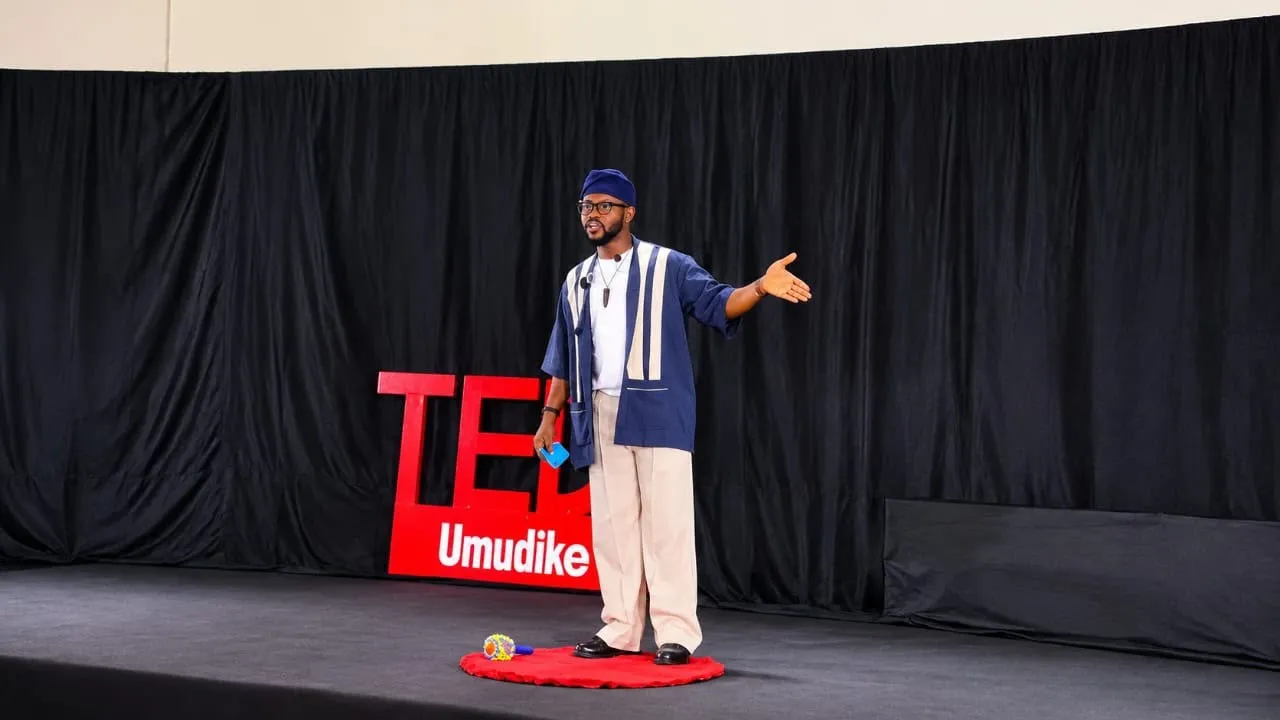
Speaking at TEDxUmudike 2026, Ndieze challenged young Africans to look beyond the growing capabilities of artificial intelligence and invest deliberately in the qualities that make human intelligence valuable. His argument was that while machines are becoming increasingly capable of producing answers, people must retain the ability to ask the right questions, understand complex problems and make decisions grounded in human experience.
He delivered the address, titled “Designing the Incomputable: The Human Genius AI Cannot Replace,” under the Future of Work track at the event, which was held on November 7 in Umudike, Abia State. The event was themed “Beyond the Norm.”
Ndieze argued that the widespread availability of sophisticated AI tools is changing the meaning of professional competence. Tasks that once required specialised knowledge, significant time and considerable resources can increasingly be completed with the assistance of generative AI systems.
That shift, he suggested, means the ability to produce something is becoming less of a competitive advantage on its own. What matters increasingly is the thinking behind the output: the problem being addressed, the people it is intended to serve and whether the proposed solution makes a meaningful difference.
“When everyone can access powerful tools, the ability to produce something is no longer the only advantage. The danger is that we become so impressed by what we can do that we stop asking why we are doing it,” he said.
His argument challenges a familiar approach to preparing young people for the future of work, one that often places considerable emphasis on acquiring technical skills, learning new software and keeping pace with emerging technologies.
While those capabilities remain important, Ndieze maintained that technical competence without sound judgment could produce solutions that are impressive in execution but disconnected from the problems people actually face.
He illustrated the distinction through the example of two people developing the same product. One could use advanced AI tools to prepare business plans, design interfaces and analyse competitors. The other could spend time speaking directly with prospective customers, observing their behaviour and understanding the challenges they encounter.
Both could eventually develop a product, but the second person's direct engagement with potential users could reveal insights that would otherwise remain hidden behind market reports and automated analysis.
For Ndieze, the difference lies in recognising that building something and understanding why it needs to exist are two separate capabilities.
“When intelligence becomes abundant, the ability to generate answers may become less valuable than our ability to discover the questions worth answering,” he said.

The human intelligence that technology often overlooks
Ndieze also drew attention to the value of indigenous knowledge and practical experience, arguing that some of the most important forms of intelligence are developed outside formal educational and technological environments.
He cited the example of a woman trading in markets across Umuahia, Aba or Umudike. Although she might not use technical expressions such as predictive analytics or machine learning, years of interacting with customers could give her an intuitive understanding of purchasing patterns, customer preferences, pricing behaviour and market demand.
Such knowledge, he argued, represents a form of intelligence built through observation, relationships and experience.
The example carries a wider implication for Africa's technology ecosystem. As businesses and innovators increasingly adopt AI, there is a risk of overlooking the contextual knowledge that makes solutions relevant to the markets they are designed to serve.
For a continent characterised by diverse languages, informal economies, local consumer behaviours and uneven access to infrastructure, understanding the realities of users remains an important part of building products that work.
AI can help entrepreneurs analyse information, identify patterns and accelerate product development. However, the ability to interpret those insights within a particular social and economic context still requires human understanding.
Ndieze identified curiosity, imagination, empathy, courage, resilience and the willingness to learn from failure as qualities young people must deliberately develop alongside their technological capabilities.
He warned against the temptation to compete with machines on the very tasks they are increasingly capable of performing, arguing that people risk undervaluing their distinct abilities when they reduce themselves to repetitive execution.
One of his central observations was particularly striking: “Judgment is not a skill. It is a scar.”
The statement reflected his argument that sound judgment is shaped by experience, difficult decisions, mistakes and the consequences of living with those decisions. While AI systems can generate recommendations that resemble expert analysis, human beings remain responsible for determining which decisions to make and accepting their consequences.
He therefore called on educational institutions, organisations and innovators to create environments where young people can experiment, make mistakes, learn from failure and develop the capacity to make responsible decisions.
“The only open question that matters is whether we will get wiser at the same speed the machines get smarter,” he said.
Taking Africa's innovation conversation beyond major cities
Beyond the conversation about artificial intelligence, TEDxUmudike 2026 also reflected a broader ambition to expand the spaces in which African ideas are developed, discussed and recognised.
Speaking at the event, its organiser and licensee, Daniel Obiyo, said bringing the TEDx platform to Umudike was driven by a determination to challenge the concentration of Africa's innovation narrative in major commercial centres such as Lagos, Abuja and Nairobi.
He argued that talent, creativity and innovative thinking are not exclusive to major cities and that communities outside established commercial hubs deserve platforms through which their ideas can reach wider audiences.
"Our relentless philosophy is simple: 'Be Intentional, or Be Forgotten.' We brought the TEDx platform to Umudike because we refuse to let our local brilliance go unnoticed. We are not just building technology or staging events; we are building voices," Obiyo said.
His remarks point to an important dimension of Africa's innovation challenge. While major cities attract much of the continent's venture capital, technology companies and institutional support, considerable entrepreneurial potential exists in smaller cities, university communities and emerging regional ecosystems.
Creating platforms for these communities to participate in conversations about technology, business and development is one way to broaden the continent's innovation landscape.
TEDx events are independently organised programmes operating under licences granted by TED, allowing local communities to organise events around ideas worth sharing. TEDxUmudike's 2026 edition brought together speakers from technology, business, academia, entrepreneurship and public leadership.
Africa's AI opportunity will depend on more than how quickly its young population adopts emerging technologies. It will also require people who can apply these tools to problems grounded in the continent's economic and social realities. For entrepreneurs, that means understanding customers before building products. For businesses and educational institutions, it means ensuring automation strengthens rather than replaces critical thinking. As AI makes execution easier, human judgment, creativity and contextual understanding will become increasingly valuable. Africa's challenge is not simply to produce more people who can use AI, but to develop innovators who know what is worth building and why.
Kelechi Ndieze
Request a correction