African, Caribbean and Pacific (ACP) lawmakers are urging the European Union (EU) to support mineral processing in resource-producing countries, arguing that access to critical minerals should translate into industrial development, skilled jobs and greater economic value for the countries supplying them.
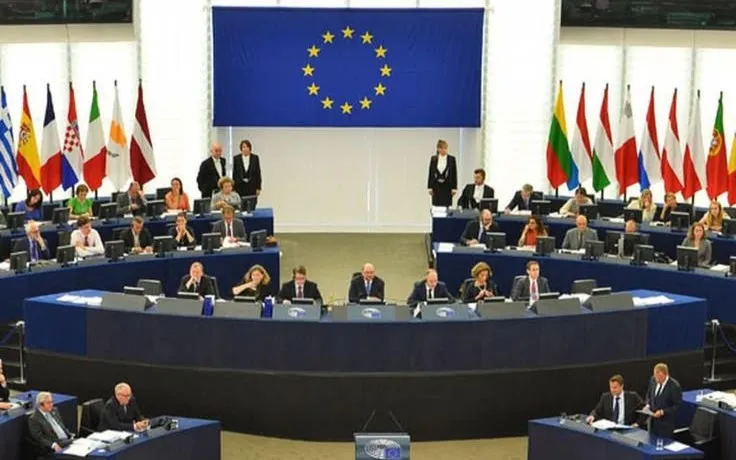
The appeal, made during the second plenary session of the Organisation of African, Caribbean and Pacific States (OACPS)–EU Joint Parliamentary Assembly in Brussels, reflects a growing concern among resource-rich developing economies: as global competition for minerals intensifies, exporting raw materials without developing domestic processing capacity risks leaving much of the economic value outside their borders.
Discussions on November 11 focused on critical raw materials, including lithium, cobalt and rare earth elements, which are increasingly important to electric vehicle batteries, renewable energy technologies, electronics and other advanced manufacturing industries.
Lawmakers argued that European partnerships with mineral-producing countries should include investment in local processing facilities, technology transfer, industrial infrastructure and vocational training. They also called for greater opportunities for domestic businesses and workers to participate in the industries being developed around their natural resources.
Uganda's Deputy Speaker of Parliament and OACPS–EU Joint Parliamentary Assembly Co-President, Thomas Tayebwa, said the benefits of mineral partnerships should be measured through employment, contracts for local businesses and revenues that can support public services.
The position reflects a broader effort by developing economies to move beyond their traditional role as suppliers of raw commodities and capture more of the value generated along global supply chains.
For many African countries, the economic imbalance is particularly significant. The Democratic Republic of Congo, for example, is one of the world's leading cobalt producers, yet the development of higher-value processing and battery manufacturing capacity remains a major industrial challenge. The country's mineral wealth has not automatically translated into a comparable position in the global battery supply chain.
The debate also exposed an important tension in Europe's own industrial ambitions. Under its Critical Raw Materials Act, the EU has set a 2030 benchmark for developing domestic processing capacity equivalent to at least 40% of its annual consumption of strategic raw materials.
While Brussels is seeking to reduce its dependence on external suppliers and strengthen its own industrial capabilities, African lawmakers want partnerships that also allow producing countries to develop competitive industries rather than remain extraction and export centres.
The European Parliament's account of the discussions highlighted the need to reconcile these objectives through investment in complementary industrial capabilities, rather than assuming that every stage of mineral processing must take place in one location.
One example raised during the debate was the partnership between Belgian materials group Umicore and Société pour le Traitement du Terril de Lubumbashi (STL), a subsidiary of the Democratic Republic of Congo's state-owned mining company, Gécamines.
The partnership focuses on recovering germanium, a critical material used in specialised technological applications, from historical mining residues at the Big Hill site in Lubumbashi. It illustrates how international industrial partnerships can support processing activities within resource-producing countries while connecting them to more advanced downstream markets.
However, establishing processing industries requires more than access to mineral deposits. Reliable electricity, transport infrastructure, skilled labour, technology, financing and predictable market access are all necessary to make such investments commercially viable.
These constraints remain significant across several mineral-producing economies, where inadequate power supply, infrastructure gaps and limited industrial financing can make local processing more expensive than exporting raw materials.
Former Deputy Executive Secretary of the United Nations Economic Commission for Africa, Antonio Pedro, argued during the discussions that mineral investment should form part of a broader regional industrialisation strategy. This would involve connecting mining operations to processing facilities, industrial zones, power networks, local suppliers and regional markets.
Such an approach could also create opportunities for African countries to develop cross-border value chains rather than independently competing to attract investments into similar industries.
Global Gateway financing under scrutiny
Beyond mineral processing, lawmakers also examined how the EU's Global Gateway initiative could support industrial development and infrastructure investment in partner countries.
The initiative is the EU's major international investment framework, with an Africa–Europe investment package targeting €150 billion in investments across areas including energy, transport, digital infrastructure, healthcare and sustainable economic development.
The European Commission has also identified sustainable mineral value chains as a priority, with an emphasis on helping African countries develop regional supply chains, diversify their economies and retain more value from their natural resources.
However, lawmakers called for financing to be predictable, aligned with national development priorities and structured in ways that do not worsen existing debt pressures.
The concern is that developing countries could accumulate additional financial obligations without securing the industrial capabilities or economic returns needed to justify the investments.
A statement from the Djiboutian delegation described the broader objective as building a more balanced economic partnership that delivers mutual benefits to Europe and ACP countries.
Djibouti's delegation was led by Omar Ahmed Waiss, Second Vice-President of the National Assembly. Other members included lawmakers Mohamed Abdallah Ali and Oumma Mohamed Hamid, alongside the Assembly's Director of Legal Affairs, Mane Mohamed Djama.
The delegation was accompanied by Djibouti's Ambassador to Belgium and the European Union, Aden Mohamed Dileita, and his First Counsellor, Abbas Elmi Ali.
The second plenary session of the OACPS–EU Joint Parliamentary Assembly ran from November 9 to 13, bringing together approximately 160 parliamentarians from Europe, Africa, the Caribbean and the Pacific. Discussions also covered international security, multilateral cooperation, development financing and ocean protection.
Established under the Samoa Agreement, signed on November 15, 2023, the parliamentary assembly provides a platform for representatives of the two blocs to discuss shared policy and development priorities. The agreement replaced the Cotonou Agreement and has been provisionally applied since January 1, 2024.
The competition for critical minerals is creating an opportunity for resource-rich African economies, but securing a place in the global supply chain is not the same as controlling a meaningful share of the value it generates. If African countries continue to export largely unprocessed minerals while importing higher-value industrial products made from those same resources, the expansion of the global clean-energy economy could reinforce an old economic pattern under a new name. Europe's demand for secure mineral supplies gives African governments an opportunity to negotiate partnerships that include processing capacity, technology, infrastructure and skills development. But these commitments must translate into operational facilities, local businesses, quality jobs and measurable economic returns. The challenge for both sides is to move beyond agreements and investment announcements towards industrial projects that actually change where value is created and retained. For Africa, the real opportunity in the critical minerals race is not simply to supply the materials powering the world's energy transition. It is to build more of the industries that will define it.
EU
Request a correction