African sport has had a remarkable November. Nigeria's under-17 women's team became the first African nation to win the FIFA U-17 Women's World Cup, Kenya claimed a historic rugby sevens title, Senegal hosted the first Olympic sporting event on African soil, and Morocco's AS FAR strengthened its position in women's club football.
The month also delivered a major development in African football governance. The Court of Arbitration for Sport (CAS) overturned the Confederation of African Football's (CAF) decision to strip Senegal of the 2025 Africa Cup of Nations (AFCON) title, restoring the country's original victory over Morocco.
There is also a potentially significant development in motorsport, with Formula One agreeing to bring its championship back to Africa through a proposed Grand Prix in Rwanda in the early 2030s.
Taken together, these developments point to a sporting landscape that is becoming more competitive and increasingly visible internationally. They also raise a more important question: can Africa turn these moments of success into lasting sporting infrastructure, stronger domestic competitions and opportunities for the next generation of athletes?
Here are the developments shaping the continent's sporting conversation.
CAS restores Senegal's AFCON title and puts football governance under scrutiny
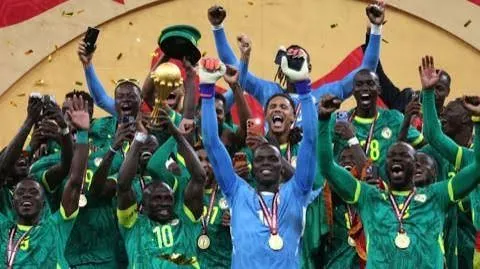
One of the most consequential developments for African football this year came on November 24, when the Court of Arbitration for Sport unanimously overturned CAF's decision to award Morocco the 2025 Africa Cup of Nations title and confirmed Senegal as champions.
The ruling ended a dispute that had lasted for months and raised difficult questions about the interpretation of football regulations, the authority of match officials and the credibility of African football's governing institutions.
The controversy began during the final on January 18, 2026, in Rabat. Senegal had defeated hosts Morocco 1–0 after extra time, with Pape Gueye scoring the decisive goal. However, the match was disrupted late in regulation time after the referee awarded Morocco a penalty. Senegalese players protested the decision and temporarily left the pitch, with play suspended for approximately 14 minutes.
The players eventually returned, Morocco missed the penalty and the match continued into extra time, where Senegal secured victory.
The dispute resurfaced in March when CAF's Appeal Board overturned the result, ruling that Senegal had forfeited the final under Articles 82 and 84 of the AFCON regulations. Morocco was consequently awarded a 3–0 victory and the championship.
Senegal challenged the decision at CAS, arguing that the referee's decision to restart and complete the match fell within his authority and should not be overturned through a subsequent administrative ruling.
In its November 24 decision, CAS upheld Senegal's appeal, set aside CAF's Appeal Board ruling and reinstated the decision of CAF's Disciplinary Board. The original 1–0 result was therefore confirmed.
The central issue was the distinction between a temporary interruption and the permanent abandonment of a match. CAS determined that the decision to resume or stop play rested with the referee, Jean-Jacques Ngambo Ndala. By restarting the game after both teams had returned to the pitch and indicated their willingness to continue, he had exercised his authority under the Laws of the Game.
The arbitration panel further concluded that Articles 82 and 84 of CAF's regulations were intended to determine the outcome of a match when a team's conduct leads the referee to abandon it permanently. Since the referee had restarted the match, those provisions could not be used to replace the result subsequently achieved on the pitch.
Importantly, CAS did not excuse Senegal's conduct. The court noted that the Senegalese Football Federation, coach Pape Thiaw and certain players had already received separate disciplinary sanctions from CAF.
That distinction matters. The ruling separates punishment for misconduct from the determination of a match result, reinforcing the principle that disciplinary consequences should not automatically translate into a change of sporting outcome.
For CAF, the decision presents an opportunity to rebuild confidence in its regulatory processes and demonstrate greater consistency in how its rules are interpreted and enforced. For African football more broadly, it reinforces the importance of independent oversight and the authority of match officials.
The ruling does not mean African football institutions will no longer face contentious decisions. It does, however, demonstrate why credible appeals processes matter. Competitions gain legitimacy when their outcomes are determined by rules applied consistently, rather than decisions that struggle to withstand independent scrutiny.
Nigeria's Flamingos deliver a historic World Cup victory
Nigeria's under-17 women's national team, the Flamingos, made history on November 7 by defeating Japan 2–1 in the final of the 2026 FIFA U-17 Women's World Cup in Morocco.
The victory made Nigeria the first African country to win the competition and the first African women's team to claim a FIFA title at any level.
Awawu Bashiru opened the scoring in the 39th minute before Oluebube Umejiaku doubled Nigeria's advantage in the 47th minute. Japan's Fuki Ito pulled one back in the 80th minute, but the Flamingos held on to secure the championship.
Nigeria's route to the final was equally significant. After losing their opening group-stage match against Poland, the team recovered to progress through the tournament, eventually defeating Brazil 3–1 in the semi-finals to reach its first final.
Umejiaku was named Player of the Match in the final, capping an impressive performance in a campaign that will be remembered as a landmark for Nigerian and African women's football.
The achievement, however, should not end with the celebrations. Youth football tournaments can identify exceptional talent, but turning that talent into a sustainable senior career requires more than a successful national team campaign. Better domestic competitions, professional coaching, sports science, financial support and clear pathways into senior football will determine how many of these players reach the highest level.
For Nigeria, the next challenge is to ensure that this generation becomes the foundation of a stronger women's football system rather than a collection of young talents remembered primarily for one tournament.
Senegal puts African sport on the Olympic stage
Senegal also made history by hosting the Dakar 2026 Youth Olympic Games, which ran from October 31 to November 13.
The competition brought together approximately 2,700 young athletes aged 14 to 17 from around the world. Events were staged across Dakar, Diamniadio and Saly, covering 25 competition sports and 151 medal events.
It was the first Olympic sporting event ever held on African soil, giving Senegal an opportunity to demonstrate its ability to organise an international multi-sport competition while placing African athletes and sporting institutions at the centre of the Olympic movement.
The host country also produced one of the Games' most memorable moments. Sixteen-year-old Elisabeth Diatta won gold in the women's 55kg beach wrestling category, becoming Senegal's first Olympic gold medallist in history. Fellow Senegalese wrestler Maguette Diop also claimed gold in the men's 80kg competition, while Ndeye Diatta added another women's beach wrestling title.
The Games also delivered a breakthrough for Kenya. The country's women's rugby sevens team defeated Australia 17–12 in a golden-point extra-time finish to win gold. It was the first time an African nation had won Olympic or Youth Olympic rugby sevens gold.
The men's competition produced another African achievement, with South Africa taking silver after losing 26–19 to France. Madagascar won bronze, securing its first Olympic medal at any level.
These results show the value of giving young African athletes opportunities to compete against international opposition. But hosting the Games is only part of the equation. The longer-term success of Dakar 2026 will depend on whether the facilities, partnerships, training opportunities and sporting programmes associated with the event continue to benefit local athletes after the international delegations leave.
AS FAR strengthen Morocco's position in women's football
Morocco's AS FAR further demonstrated the growing competitiveness of African women's club football by defeating South Africa's Mamelodi Sundowns 3–1 in the 2026 CAF Women's Champions League final on November 15 in Ismailia, Egypt.
Imane Touriss scored twice, while Hiba Youssifi added a third goal. Refilwe Tholakele scored Sundowns' only goal.
The victory gave AS FAR their third continental title, moving them ahead of Sundowns as the competition's most successful club. More importantly, the Moroccan side became the first team to successfully defend the Women's Champions League trophy, following its 2025 triumph.
Both clubs entered the final with two titles each. Sundowns had won the inaugural competition in 2021 and again in 2023, while AS FAR claimed their first championship in 2022 before adding the 2025 and 2026 titles.
The result reinforces the growing rivalry between Morocco and South Africa in women's club football. It also highlights how sustained investment, competitive structures and institutional support can help clubs establish themselves at continental level.
For other African teams, the challenge is to build similarly competitive environments rather than rely on occasional participation in continental tournaments.
Rwanda is preparing to bring Formula One back to Africa
Away from the football and multi-sport competitions, Rwanda has secured a potentially significant place in the future of international motorsport.
Formula One announced on October 13 that it had reached a 10-year agreement to bring the championship back to Africa through the proposed Formula 1 African Grand Prix, presented by Visit Rwanda.
The race is expected to take place in the early 2030s at a purpose-built circuit in Bugesera, near Kigali. The track will be developed to meet FIA Grade 1 standards, the highest circuit classification required to host Formula One races.
The announcement marks a potential return to the continent for the championship after more than three decades. The last Formula One race held in Africa was the 1993 South African Grand Prix.
For Rwanda, the project could create opportunities across tourism, hospitality, transport, infrastructure and international business. A Formula One race would also give the country access to one of the world's most commercially valuable sporting platforms.
However, the distinction between securing an agreement and actually hosting a Grand Prix is important. The circuit still needs to be built, and the project will require significant capital and infrastructure development.
Its long-term value should therefore be measured not simply by the international attention it attracts, but by the economic activity, local employment and motorsport opportunities it creates for Rwandans and the wider region.
Nigerian sprinters add to Africa's success in Dakar
Athletics provided another significant moment for African sport at the Youth Olympic Games.
Nigeria's Gift Bright and Rosemary Nwankwo won the men's and women's 100-metre titles respectively on November 8, giving the country a sprint double.
Bright, aged just 15, won the men's final in 10.28 seconds, setting a Youth Olympic Games record. Nwankwo won the women's race in 11.16 seconds, although her time was wind-assisted and therefore not eligible for record purposes.
Kenya also produced impressive performances in distance running. Abigael Kosgei won the women's 2,000-metre steeplechase, while Enock Tuitoek claimed the men's 3,000-metre title. Ethiopia's Goytom Mekonen finished second behind Tuitoek, continuing the country's strong presence in international distance running.
These performances underline Africa's depth in athletics and the importance of developing young competitors before they reach senior international competitions.
They also offer a reminder that sporting success is rarely produced by talent alone. Access to quality coaching, training facilities, medical support and regular international competition can determine whether promising young athletes progress or disappear from the sport.
November's sporting developments highlight Africa's growing influence in global sport, from historic victories and international hosting to renewed attention on football governance. But success goes beyond medals and trophies. Sport is also an economic industry with opportunities in broadcasting, sponsorship, tourism, infrastructure and professional services. For Africa to capture more of this value, sporting achievements must translate into stronger institutions, competitive domestic leagues, better facilities and sustainable athlete development. CAF must also strengthen confidence in its regulatory processes following the AFCON dispute. Ultimately, Africa's sporting future will depend on its ability to turn individual victories into lasting progress.
Senegalese Team
Request a correction