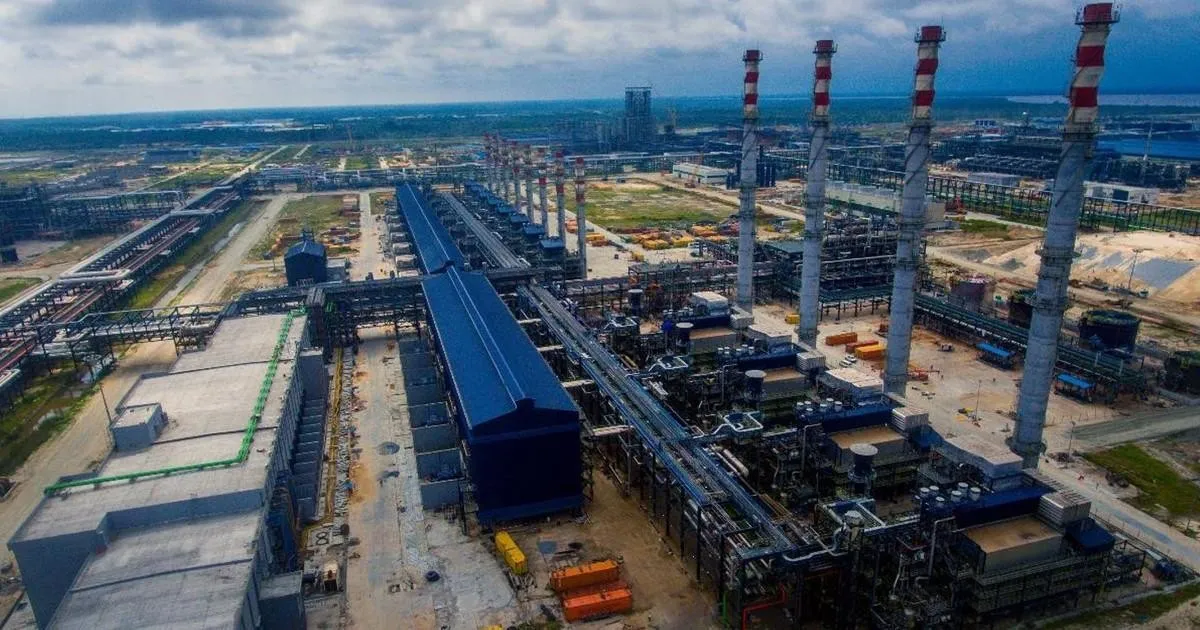
Dangote Petroleum Refinery and Petrochemicals is preparing for a potentially historic debut on the Nigerian Exchange (NGX), with trading expected to begin as early as Tuesday, December 1, 2026.
At its initial public offering (IPO) price of ₦525 per share, the refinery carries an implied valuation of approximately ₦65.2 trillion ($47.8 billion), positioning it to become the largest company listed on the Nigerian Exchange and potentially the most valuable company with a primary listing on an African stock exchange.
The anticipated listing follows approval by the Securities and Exchange Commission (SEC) of the refinery's share-allocation plan on Monday, November 23. The approval clears a significant regulatory hurdle after weeks of waiting by investors who subscribed to the heavily oversubscribed offer.
Dangote Group Vice President for Oil and Gas, Devakumar Edwin, publicly announced yesterday that the refinery will begin trading on the NGX on Tuesday, December 1, 2026. However, final administrative steps—such as filing remaining documents with NGX Regulation Limited (NGX RegCo) and crediting investors' CSCS accounts—are still being finalized ahead of the opening bell.
The numbers behind the public offer
The refinery's IPO attracted substantial interest from individual and institutional investors, reflecting demand for exposure to one of Africa's largest industrial investments.
According to reports on the approved allotment schedule, approximately 3.78 million investors subscribed for 11.15 billion shares, against an original offer of 4.1 billion shares. The total demand was therefore almost three times the initial number of shares available.
To accommodate the additional demand, the offer was expanded, with approximately 5.196 billion shares expected to be allotted at ₦525 each, representing proceeds of about ₦2.73 trillion.
The offer was marketed as a people's IPO, allowing Nigerians to participate in the ownership of the refinery with a minimum subscription of just 10 shares, requiring an investment of ₦5,250.
The scale of participation is significant for Nigeria's capital market, where direct retail investment in large industrial businesses has historically been limited. Digital investment platforms also helped make the offer accessible to a wider pool of investors.
However, the distinction between the number of shares allotted and the number initially offered is important. The expanded allotment represents approximately 26.7 per cent more shares than the original 4.1 billion-share offer.
A small public stake, a concentrated ownership structure
Despite the scale of the transaction, the proportion of the refinery being opened to new public investors remains relatively small. The company's September prospectus recorded 120.13 billion existing issued shares before the public offer. It also showed that Aliko Dangote beneficially controlled approximately 87.27 per cent of the company through his interests in Dangote Oil Refining Company, Dangote Industries and Greenview International Corporation.
If the reported 5.196 billion new shares are fully allotted, they would represent approximately 4.1 per cent of the enlarged issued share capital. Dangote's beneficial ownership would consequently fall to roughly 83.7 per cent, assuming no other changes in the ownership structure.
This is an important distinction: the approximately 4 per cent figure represents the newly allotted shares as a proportion of the enlarged share capital. It should not automatically be interpreted as the refinery's entire free float, since other existing shareholders also hold shares.
The prospectus identifies the Nigerian National Petroleum Company (NNPC) as holding approximately 6.82 per cent, while other existing shareholders collectively account for another 5.95 per cent. Whether all these shares qualify as freely tradable will depend on the applicable ownership and listing arrangements.
The result is a company with a substantial valuation but a highly concentrated ownership structure. That distinction matters because a company's market capitalisation does not necessarily translate into the volume of shares available for everyday trading.
What the listing could mean for the Nigerian Exchange
The refinery's arrival could significantly change the composition and perceived scale of Nigeria's equity market.
One estimate cited by *BusinessDay *suggests that the NGX's total market capitalisation could rise from approximately ₦165 trillion to ₦230 trillion following the listing. The projection reflects the addition of a company valued at more than ₦65 trillion to the exchange.
That would represent a substantial increase in the exchange's reported size and give Nigeria a stronger position in the competition for large corporate listings across Africa.
However, the increase in market capitalisation should not be confused with an equivalent increase in the amount of money flowing into the stock market. Market capitalisation is calculated using share prices and the total number of issued shares; it does not represent cash available for investment or the value of shares actively changing hands.
The refinery's relatively limited new public allocation also raises questions about liquidity. With a substantial proportion of shares concentrated among controlling shareholders and strategic investors, the number of shares available for active trading could be considerably smaller than the company's headline valuation suggests.
This could make the stock particularly influential on the NGX's overall performance while leaving its actual trading activity dependent on the relatively small proportion of shares available to investors.
The broader significance is that the listing could help attract attention from international investors seeking exposure to Nigeria's industrial and energy sectors. But sustaining that interest will depend on the refinery's financial performance, transparency, corporate governance and ability to deliver returns to shareholders.
The bigger ambition behind the IPO
Beyond providing an entry point for public investors, the offer is intended to support the refinery's next phase of expansion.
According to its prospectus, the company intends to use the net proceeds from the original ₦2.15 trillion offer, after estimated expenses, to finance its expansion programme.
The plan involves increasing refining capacity from approximately 700,000 barrels per day to 1.4 million barrels per day, alongside investments in supporting infrastructure and associated facilities. The expansion is targeted for completion by 2029, with total estimated capital expenditure of approximately $14.3 billion.
This means the IPO is not simply an exercise in bringing a large private company to the stock market. It is also part of a broader financing strategy for an industrial project that requires substantial capital to expand its operations.
The refinery began operations in 2024 and has become an increasingly important part of Nigeria's petroleum supply chain. Its expansion ambitions could further strengthen its position in the domestic market while increasing its capacity to serve regional and international customers.
The challenge will be converting that industrial scale into sustainable profitability and shareholder value
Dangote Refinery's proposed listing could strengthen the Nigerian Exchange's position among Africa's capital markets while giving ordinary investors access to one of the continent's largest industrial businesses. However, its substantial valuation contrasts with the relatively small proportion of shares available to the public, raising questions about market liquidity and investor influence. Subscribers will now be watching for final allotment details, the crediting of shares to their CSCS accounts and the start of trading. Ultimately, the listing's success will depend not on its headline valuation alone, but on sustained profitability, transparency and shareholder returns.
Dangote Refinery
Request a correction