Africa has something the global carbon economy increasingly needs: forests, renewable energy potential, land, natural resources and projects capable of reducing greenhouse gas emissions. What it has struggled to secure is a reliable way to turn those assets into investment, revenue and long-term economic value.
A new United Nations-backed initiative is attempting to address part of that problem.
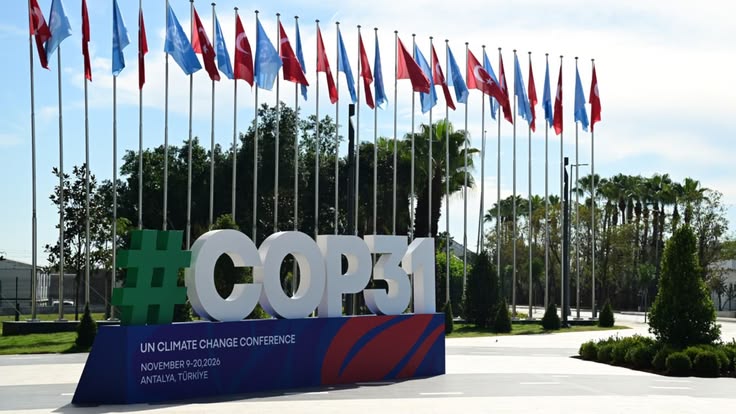
On 12 November, at the COP31 climate summit in Antalya, Türkiye, the United Nations Trade and Development (UNCTAD) will officially launch the Global Carbon Market Network (GCMN), a platform designed to connect fragmented carbon markets and make it easier for capital to flow into climate projects, particularly in developing economies.
The initiative brings together carbon exchanges, financial institutions, investors, project developers and market standard-setters. Its central proposition is straightforward: carbon markets cannot attract capital at scale if buyers do not trust the credits, investors cannot assess their quality and market participants struggle to transact across different systems.
That is a problem worth solving. But for African countries, the bigger question is who ultimately captures the economic value these markets generate.
Connecting a fragmented market
Carbon markets allow companies and other organisations to buy credits representing verified emissions reductions or removals, helping finance projects that might otherwise struggle to attract funding.
Yet the market remains divided across different standards, registries, trading platforms and regulatory frameworks. Concerns about credit quality, weak verification and double counting have undermined confidence, making some investors cautious.
The GCMN aims to improve coordination rather than create another marketplace or introduce a competing carbon credit standard.
Its proposed work includes strengthening market integrity, improving the measurement and verification of emissions reductions, promoting cooperation between exchanges and exploring digital technologies that could improve transparency and reduce transaction costs.
"Carbon markets can play a role in putting a price on emissions and mobilizing finance for climate action, but their effectiveness depends on trust, integrity and functioning market infrastructure," said Nan Li Collins, UNCTAD's Director of Investment and Enterprise and Chair of the UN Sustainable Stock Exchanges Initiative.
The network will also support the implementation of Article 6 of the Paris Agreement, which establishes frameworks for international cooperation in emissions reduction, including the transfer of carbon credits between countries.
Why the timing matters
Carbon pricing is becoming a more significant part of the global climate policy landscape. According to the World Bank's State and Trends of Carbon Pricing 2026 report, direct carbon pricing instruments now cover just over 29 per cent of global greenhouse gas emissions. They generated more than $107 billion in public revenue in 2025.
These figures need some context. The $107 billion represents government revenue from carbon taxes and emissions trading systems, not the total value of voluntary carbon credit transactions.
Meanwhile, voluntary carbon markets offer developing economies another potential route to attract private investment. UNCTAD's research indicates that much of the credit supply originates in developing countries, while buyers are concentrated in developed economies.
Better-connected markets could help reduce some of the barriers between project developers seeking financing and international buyers looking for credible credits.
But connectivity alone will not guarantee higher prices, stronger demand or better outcomes for host countries. Those depend on the quality of projects, market rules and the bargaining power of the countries supplying the credits.
Africa has a seat at the table. But will it have a stake? The network's founding members include institutions from across Africa, Asia, Europe, the Middle East and Latin America.
African participants include the Johannesburg Stock Exchange (JSE), Nigeria Sovereign Investment Authority (NSIA) and Casablanca Finance City in Morocco. Other founding members include Singapore's Climate Impact X, Qatar's Global Carbon Council, the Indonesia Stock Exchange and carbon credit standard-setter Verra.
Their participation matters. It gives African financial institutions and market operators an opportunity to contribute to discussions about the standards, infrastructure and trading arrangements that will shape the future of carbon markets.
The network's initial programme will include capacity-building, benchmarking market practices, producing a global report on the state of carbon markets and engaging regulators on technical issues affecting market interoperability.
For Nigeria, NSIA's participation is particularly relevant. The country has been developing its carbon market framework and will need credible institutions, investment and technical expertise to turn its climate ambitions into bankable projects.
But Africa must approach this opportunity with more than enthusiasm. Carbon credits are not automatically a development dividend. Poorly designed agreements can leave communities with limited benefits while valuable environmental assets are transferred to international buyers. Weak verification can also expose projects to accusations of greenwashing, damaging the credibility of the entire market.
African governments will therefore need strong regulatory frameworks, transparent credit ownership arrangements, reliable monitoring systems and clear rules on how revenues are shared with local communities.
The continent must also avoid becoming a passive supplier of credits while financial intermediaries and international buyers capture most of the value.
The carbon economy is becoming an important part of global finance. For Africa, the opportunity is not simply to sell carbon credits. It is to build the institutions, expertise and financial infrastructure that allow the continent to participate more profitably in the emerging green economy. The Global Carbon Market Network could help open that door. Whether African countries benefit will depend on what they do with the opportunity: how they regulate their markets, negotiate transactions, protect communities and ensure that carbon finance supports domestic economic development.
Source archive dated 11 Nov 2026. This article is not a live update.
UNCTAD
Request a correction →