Nigeria's fashion industry is attracting international attention, drawing bigger audiences to its runways and creating opportunities for designers seeking customers beyond the country's borders. But behind the growing global visibility is an uncomfortable contradiction: the country is building a sizeable fashion economy while relying increasingly on foreign suppliers for the textiles that keep it running.
The Nigerian Investment Promotion Commission (NIPC) estimates the country's fashion industry at $4.7 billion, making it an important part of Nigeria's wider creative economy. The figure points to a substantial commercial opportunity for designers, clothing retailers, manufacturers and businesses operating across the fashion value chain.
Nigeria's appeal is not difficult to understand. Its large consumer market, strong fashion culture and established tailoring and garment-making communities provide a foundation for a thriving industry. Digital platforms have also made it easier for local designers to reach customers outside Nigeria, while international interest in African aesthetics has created new opportunities for homegrown labels.
Lagos is increasingly central to that ambition. The city has become an important meeting point for designers, retailers, buyers and other players looking to participate in Africa's fashion economy.
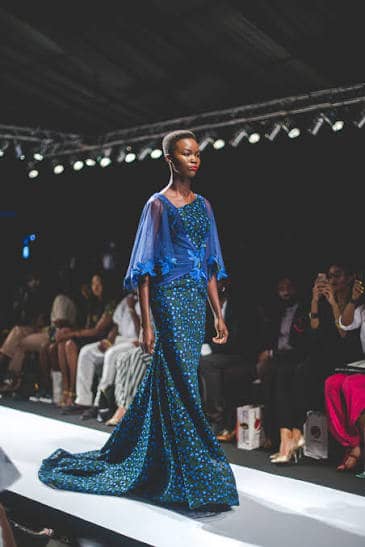
The latest edition of Lagos Fashion Week, held from October 28 to November 1, 2026, offered another indication of the industry's growing reach. The 16th edition attracted approximately 16,000 attendees and featured 65 designers, according to Vogue. Founded by Omoyemi Akerele in 2011, the event has evolved beyond a showcase for new collections into a platform for connecting African designers with international buyers, media organisations and potential commercial partners.
That distinction matters. A fashion show can generate attention, but the industry's commercial value depends on what happens afterwards: whether designers secure retail partnerships, attract investment, build distribution networks and turn international interest into sustained sales.
Nigeria's cultural identity also gives its fashion industry a distinctive advantage. Indigenous textiles and craftsmanship, including Yoruba Aso-Oke and Igbo Akwete, continue to influence contemporary designs. By adapting these materials and techniques for modern consumers, designers can create products with a clear cultural identity rather than compete solely on price against mass-produced international brands.
However, the growing market for Nigerian fashion has not been matched by a comparable recovery in domestic textile manufacturing.
National Bureau of Statistics data show that Nigeria's textile and textile-article imports rose from ₦365.46 billion in 2022 to ₦377.47 billion in 2023. The figure then jumped to ₦726.18 billion in 2024 before reaching approximately ₦1.06 trillion in 2025. In the first half of 2026 alone, imports amounted to ₦578.51 billion.
The numbers expose a structural weakness in the fashion value chain. Designers and garment makers may have access to a large consumer market, but many still depend on imported fabrics and materials to meet production requirements. That dependence leaves businesses exposed to exchange-rate movements, import costs and supply disruptions, making it harder to maintain predictable prices and compete on margins.
The consequences extend beyond fashion entrepreneurs.
Speaking at an industrial policy session in Lagos in September 2026, Director-General of the Manufacturers Association of Nigeria (MAN), Segun Ajayi-Kadir, recalled the scale of the country's former textile industry. He said seven textile factories once operated across the seven states he coordinated during an earlier assignment, but none remained. He also recalled that the industry had previously employed approximately 25,000 people.
His remarks underline what Nigeria risks losing when domestic manufacturing declines: not just factories, but jobs, technical skills, industrial capacity and the economic activity that connects cotton farmers, textile producers and garment manufacturers.
Reviving that chain will require more than celebrating Nigerian designers or staging internationally recognised fashion events. Manufacturers need reliable electricity, affordable financing, modern equipment and policies that make local production commercially viable. Better access to quality raw materials and stronger links between cotton farming, textile processing and garment production will also be essential.
Nigeria's fashion industry has already demonstrated that it can attract consumers, develop recognisable brands and command international attention. The next test is whether it can turn that cultural and commercial influence into industrial capacity. A country that designs and sells more clothing but imports much of the fabric behind it is capturing only part of the economic opportunity. For Nigeria, the bigger prize is not simply becoming a destination for African fashion. It is building an industry capable of making more of what it sells, creating jobs and earning export revenue along the way.
Source archive dated 13 Nov 2026. This article is not a live update.
Lagos Fashion Week
Request a correction →