Ghana has spent much of the past two years trying to repair an economy battered by high inflation, currency depreciation and mounting public debt. Now, the government wants to turn that recovery into something more tangible: factories, stronger local businesses and jobs.
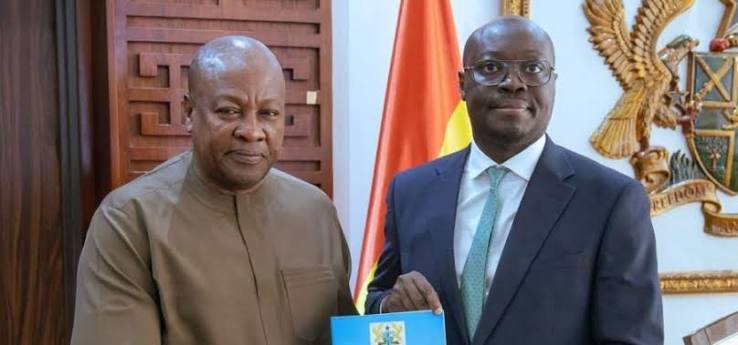
That ambition sits at the centre of the New Economy programme, a four-year investment framework covering 2027 to 2030, with an advertised investment target of approximately $10 billion. Finance Minister Cassiel Ato Forson is expected to provide its financial and implementation details when he presents the 2027 Budget to Parliament today, Thursday, November 12.
Announced by President John Dramani Mahama, the programme represents a shift in economic priorities. Rather than concentrating primarily on restoring macroeconomic stability, the government wants to expand what Ghana produces, process more of its raw materials locally and help domestic businesses compete in regional and international markets.
The proposition is straightforward: Ghana should earn more from what it grows, mines and manufactures instead of exporting raw materials and importing finished products.
But turning that ambition into an investment programme will require more than a large headline figure.
There are reasons for the government's confidence. Ghana completed the final review of its 39-month International Monetary Fund (IMF) Extended Credit Facility programme in July 2026, unlocking a final disbursement of approximately $371 million and bringing total programme disbursements to about $3 billion.
Economic indicators have also improved. Real GDP grew by 6.0% in the second quarter of 2026, while annual inflation eased to 5.2% in September.
Ghana's economy also crossed the $100 billion mark in nominal terms in 2025, reaching approximately $114.2 billion, according to the Ghana Statistical Service. GDP per capita stood at $3,385.
These figures suggest a meaningful recovery, although rising GDP does not automatically translate into higher household incomes or better employment opportunities.
That distinction explains the government's new emphasis. Stability can restore investor confidence and make business planning easier, but it cannot independently solve the structural constraints that prevent companies from expanding: expensive credit, unreliable electricity, inadequate infrastructure and limited domestic processing capacity.
Seven sectors, one industrial ambition
The New Economy programme identifies seven priority areas. They include macroeconomic stability; commercial agriculture and agribusiness; energy; critical minerals and value addition; cotton, textiles and garments; tourism, culture and creative arts; and pharmaceutical manufacturing.
The priorities reflect an attempt to connect different parts of Ghana's productive economy.
In agriculture, the ambition is to increase domestic food production while expanding processing, storage and distribution. Oil palm and other commercial farming activities are among the identified opportunities.
In mining, the government wants to retain more economic value by encouraging local processing of minerals rather than relying predominantly on raw-material exports.
Textiles and garments offer opportunities for manufacturing employment and stronger domestic supply chains, while pharmaceutical production could reduce dependence on imported medicines.
Tourism and the creative industries provide another route to employment and foreign-exchange earnings.
Energy underpins the entire proposition. Without reliable and affordable electricity, industrial expansion becomes considerably more expensive.
Financing is where the programme becomes particularly interesting.
On November 10, Forson reportedly ruled out additional government borrowing to finance the initiative, saying it would be supported through domestic revenue mobilisation and savings from fiscal consolidation.
The proposed approach includes allocating an additional 0.5% of GDP from government revenue and reducing the primary surplus target from 1.5% to 0.5% of GDP from 2027.
A primary surplus occurs when government revenue exceeds expenditure before interest payments. Reducing the target creates additional room for investment, but also means the government will have less fiscal buffer for debt reduction.
There is an important distinction between the figures being reported. While the programme has been publicly presented as a $10 billion investment over four years, GBC reported on November 10 that Forson had outlined annual allocations equivalent to 1.5% of GDP, potentially amounting to at least $13 billion over the period.
That difference needs clarification in Thursday's Budget. The government must explain the actual funding envelope, how the annual allocations are calculated and whether the headline figure includes private-sector investment.
The IMF has indicated that a lower primary surplus target could remain consistent with debt sustainability, provided Ghana strengthens revenue mobilisation and improves public financial and investment management.
What investors should watch
Beyond the funding, execution will determine whether the programme delivers.
Businesses will want clarity on the projects government intends to support, the incentives available, access to financing and the role of private investors. The relationship between the New Economy and the existing 24-Hour Economy policy also requires explanation, particularly where their objectives overlap.
Ghana has launched industrialisation initiatives before. The challenge has often been less about identifying promising sectors than ensuring that factories have reliable power, affordable financing, consistent raw-material supplies and viable markets.
The African Continental Free Trade Area offers an opportunity to expand beyond Ghana's domestic market, but local manufacturers will need to be competitive before regional market access can translate into meaningful export growth.
Ghana's recovery is reaching a more demanding stage. The government has demonstrated progress in restoring economic stability; now it must show that the gains can support productive investment without reopening the fiscal vulnerabilities that contributed to the crisis. For investors, the New Economy offers an early indication of where government wants capital to flow. For businesses, its value will depend on whether policy commitments translate into infrastructure, financing and commercially viable opportunities. For ordinary Ghanaians, however, the most important measure will be whether the programme creates sustainable employment and improves incomes. Thursday's Budget is therefore more than a presentation of spending priorities. It is the first serious test of whether Ghana can move from repairing its economy to building one that produces more, employs more people and retains a greater share of the value generated within its borders.
Source archive dated 11 Nov 2026. This article is not a live update.
President John Mahama
Request a correction →