
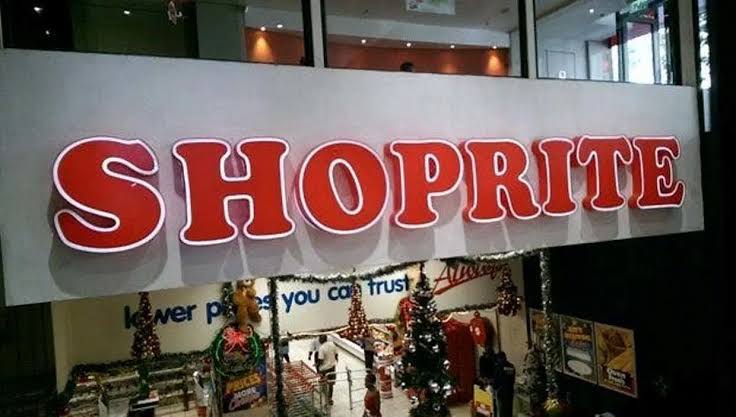
Shoprite’s Nigerian business is changing how it wants to sell groceries. After years of struggling with high rents, foreign exchange losses and operating costs, the retailer plans to expand through smaller neighbourhood stores rather than rely mainly on large shopping malls.
The plan marks another stage in the restructuring of Retail Supermarkets Nigeria Limited (RSNL), the local company that operates the Shoprite franchise. Three stores have reopened after a temporary shutdown, while the business is preparing to introduce standalone outlets, according to the executive director of investments at MBO Capital Management Limite, Adekunle Adebiyi,
Adebiyi disclosed the plans in an interview on Nairametrics’ Drinks and Mics recently. He said the company had temporarily shut its operations to negotiate with suppliers and address outstanding financial obligations before reopening three stores.
The proposed neighbourhood format is intended to reduce the cost of running supermarkets by allowing the business to lease smaller premises and spend more on retail equipment than property development. Adebiyi said the company had not settled on a specific number of new outlets or an opening timetable.
The shift follows years of pressure on a business that once relied heavily on large shopping centres to attract customers.
Shoprite opened its first Nigerian store at The Palms Shopping Mall in Lagos on December 16, 2005. But in May 2021, its South African parent, Shoprite Holdings Limited, completed the sale of its Nigerian supermarket operations to Ketron Investment Limited, an investment vehicle led by Persianas Investment Limited. The Nigerian business continued under RSNL through a franchise arrangement, with MBO Capital among the financial advisers to the acquisition.
The change in ownership did not remove the pressures facing the retailer. In June 2024, RSNL announced the closure of its Wuse store at Novare Wuse Central Mall in Abuja, citing the prevailing business environment and the outlet’s financial performance.
Further operational difficulties emerged in 2025, when some outlets were temporarily shut amid working capital constraints and disruptions linked to electricity costs and unreliable power supply. The company subsequently began a phased restructuring programme in August 2025.
In March 2026, RSNL’s chief strategy officer, Bunmi Adeleye, said the company was restructuring rather than leaving Nigeria. She disclosed plans to reopen outlets at The Palms and Circle Mall in Lagos and said the retailer was considering smaller stores to reduce expenses on rent, electricity and diesel. She also confirmed that the company had hired a chief commercial officer.
How the old model became expensive
Adebiyi identified foreign exchange exposure as one of the factors that weakened the business. He said about 17 of the retailer’s 28 stores had dollar-denominated rental agreements when the acquisition took place.
As the naira depreciated, the cost of servicing those leases increased. Adebiyi said rent should ordinarily account for about eight to 10 per cent of a supermarket’s revenue, but some Shoprite locations faced substantially higher costs.
The company also faced technology and inventory management problems. According to Adebiyi, it lost access to the enterprise resource planning system used by its former parent company and had to spend billions of naira replacing it. That investment, he said, diverted funds that could otherwise have supported day-to-day operations.
The experience points to a difficult transition for a retailer that had to take over not just stores, but also the systems and infrastructure needed to run them.
The financing problem behind the reset
The proposed smaller-store model also exposes a weakness in how businesses are financed in Nigeria.
Adebiyi said MBO Capital struggled to obtain bank financing for the 2021 acquisition because lenders wanted tangible assets that could serve as collateral. A supermarket may generate substantial revenue, but much of its operating value is tied to inventory, leased premises, refrigeration equipment and supplier relationships rather than buildings it owns.
The investors eventually relied on alternative funding arrangements to complete the acquisition.
That creates a challenge for retailers seeking to expand without owning property. A business can have customers, stock and a functioning distribution network but still struggle to secure conventional bank loans if it lacks the fixed assets lenders prefer.
The issue is not limited to Shoprite. Smaller retailers operating on leased premises may face similar difficulties when they need financing for inventory, supplier payments or expansion.
A different strategy, but no guarantee of recovery
The move towards neighbourhood stores could lower some of Shoprite’s fixed costs and bring outlets closer to residential customers. But smaller stores will not automatically solve the business’s problems.
The retailer still needs reliable supply chains, efficient inventory management, affordable power, competitive prices and enough working capital to keep shelves stocked. It must also compete in a market where consumers are increasingly sensitive to price and can choose from open markets, local supermarkets and other retail chains.
RSNL’s website currently lists 25 stores across 14 states. That differs from the approximately 23 stores Adeleye cited in March, so the figures should not be treated as a confirmed current operating count without clarification from the company.
Shoprite Holdings, meanwhile, has continued to reduce its direct exposure to Nigeria. In its 2026 financial statements, the South African group said it had agreed to dispose of its remaining Nigerian property interests, including the companies that own Asaba Mall, Delta Mall and Owerri Mall. The group classified the Nigerian property operations as discontinued operations. This is separate from RSNL’s ownership and operation of the Nigerian supermarket franchise.
The experience shows how currency exposure, expensive leases, weak operating systems and a credit market built around physical collateral can combine to undermine a business, even one with an established brand and customer base. If RSNL’s smaller-store strategy succeeds, it could offer a more viable model for organised retail in a market where consumers are watching every naira. But the real test will be whether the company can keep stores stocked, control costs and generate enough cash to fund its next stage of growth.
Shoprite’s restructuring raises a bigger question about the economics of modern retail in Nigeria: can a supermarket build a profitable business without owning the property it operates from, and can it access the financing needed to stock and grow those stores? The experience shows how currency exposure, expensive leases, weak operating systems and a credit market built around physical collateral can combine to undermine a business, even one with an established brand and customer base. If RSNL’s smaller-store strategy succeeds, it could offer a more viable model for organised retail in a market where consumers are watching every naira. But the real test will be whether the company can keep stores stocked, control costs and generate enough cash to fund its next stage of growth.
Source archive dated 9 Nov 2026. This article is not a live update.
Shoprite
Request a correction →