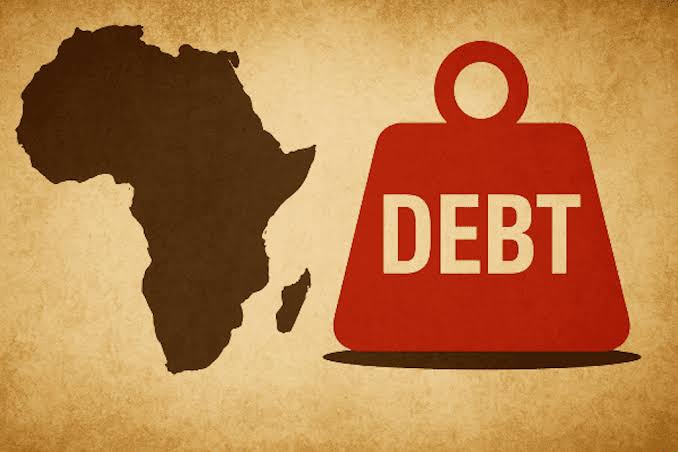
African governments are making progress in stabilising public debt, but the cost of servicing existing loans continues to limit how much they can spend on infrastructure, healthcare, education and other development priorities.
The International Monetary Fund (IMF), in its October 2026 Regional Economic Outlook for Sub-Saharan Africa, said interest payments absorb about 12 per cent of government revenue in the typical country. It warned that high interest burdens, low foreign reserves and declining aid are leaving governments with limited room to respond to new economic shocks.
The pressure is significant even as the region's debt ratios begin to decline. The World Bank's October 2026 Africa Economic Update estimates that public debt has broadly stabilised at about 57 per cent of gross domestic product (GDP). However, it says high debt-service costs continue to restrict spending on health, education and infrastructure.
For finance ministries, the challenge is no longer only how to reduce the amount owed. It is how to meet repayment obligations without weakening the public investment needed to support economic growth.
The World Bank's April 2026 Africa Economic Update had already highlighted the scale of the trade-off, finding that interest payments exceeded public spending on health or education in four out of five African countries. It estimated that interest payments would fluctuate between 2.9 and 3.2 per cent of GDP over 2023–2026.
The October update reinforces the concern, although it does not repeat the four-in-five country comparison.
Debt is stabilising, but the cost remains high
The distinction between a country's debt stock and the cost of servicing it is important.
A stable debt-to-GDP ratio does not necessarily mean that governments have more money available for development. Interest rates, exchange-rate movements, the maturity of loans and the share of debt owed in foreign currencies all influence how much governments must set aside for repayments.
The IMF said earlier fiscal adjustments and declining debt ratios had strengthened the region's position before the latest external shocks. However, borrowing remains expensive, and the region's resilience varies considerably between resource-rich economies and countries with less favourable export conditions.
For countries with substantial foreign currency debt, depreciation increases the amount of local currency required to meet dollar- or euro-denominated obligations. Governments may also face higher refinancing costs when commercial bonds mature and they need to borrow again.
The World Bank's April report projected that external public debt service as a share of government revenue would rise from 15.4 per cent in 2024 to about 18.2 per cent in 2025. It also estimated that principal repayments would increase from $37 billion in 2024 to $59.2 billion in 2025, reflecting maturing commercial loans, bond redemptions and the resumption of payments under debt restructurings.
These figures cover external debt service, which includes interest and principal repayments. They are different from the IMF's estimate that interest payments alone absorb about 12 per cent of government revenue in the typical country.
Domestic borrowing creates another pressure
With international borrowing still expensive, governments have increasingly relied on domestic financial markets to meet their financing needs.
Borrowing in local currency can reduce exposure to exchange-rate movements. But when governments absorb a large share of available domestic savings, businesses can find it harder or more expensive to obtain credit.
The IMF has warned that greater reliance on domestic banks can increase their exposure to government debt and reduce the funds available to businesses and households. This creates a risk for the wider economy: weaker public finances can affect bank balance sheets, while reduced private-sector lending can slow investment and job creation.
For businesses, the consequences can include higher borrowing costs and fewer affordable financing options. Smaller companies, which often have limited access to capital markets, are particularly exposed to tighter credit conditions.
The problem is therefore not simply that governments are borrowing more. It is that the cost of financing public deficits can compete with the private investment needed to expand production, create jobs and increase tax revenue.
Aid cuts narrow the financing options
The pressure on public finances is also coming from declining development assistance.
The Organisation for Economic Co-operation and Development (OECD), in its projections for 2026, expects bilateral official development assistance to Sub-Saharan Africa to fall by another 11.6 per cent this year, following a 26.3 per cent decline in 2025. If realised, this would leave aid to the region at its lowest level since the early 2000s.
The OECD also projects that total official development assistance from its Development Assistance Committee members will fall by 6.9 per cent in 2026, marking a third consecutive annual decline.
The reductions are particularly difficult for low-income and aid-dependent countries, where grants and concessional financing support public health, education, humanitarian programmes and other services.
As external assistance declines, governments must rely more heavily on domestic revenue, private investment and other financing arrangements. But those alternatives are not always available on affordable terms, especially for countries already facing high debt costs.
Growth alone will not resolve the problem
Sub-Saharan Africa's economic outlook remains relatively resilient. The World Bank's October update projects regional growth of 4.3 per cent in 2026, up from 4.1 per cent in 2025. The IMF is more optimistic, forecasting growth of 4.5 per cent in both 2026 and 2027.
However, stronger growth does not automatically translate into enough government revenue to meet development needs and debt obligations. The World Bank says the region's growth remains insufficient to substantially reduce extreme poverty or create enough jobs for its rapidly expanding labour force.
The IMF has urged governments to protect productive investment while continuing fiscal adjustments. It also recommends saving temporary commodity windfalls, improving debt transparency and strengthening the conditions for private-sector investment.
For African governments, the task is to improve revenue mobilisation and debt management without cutting the investments that support productivity and long-term growth.
Africa's debt challenge is increasingly about what governments can no longer afford to do. When interest payments take a growing share of public revenue, fewer resources remain for reliable electricity, roads, schools, hospitals and the infrastructure businesses need to grow. The danger is a cycle in which high borrowing costs weaken public investment, slower investment constrains productivity and revenue growth, and governments become more dependent on borrowing. Breaking that cycle will require more than reducing debt ratios. It will mean securing cheaper and more sustainable financing, improving domestic revenue collection and protecting the investments that can make future borrowing easier to repay.
Source archive dated 9 Nov 2026. This article is not a live update.
Okelue David Ugwunta
Request a correction →