Nigeria wants to become an investment-grade economy by 2029. But S&P Global Ratings is warning that the country may be setting itself a deadline that its economic fundamentals cannot meet.
The warning is significant because it exposes the distance between Nigeria’s improving economic outlook and the level of confidence international credit markets still have in the country.
Managing Director for Research and Analytics in Africa at S&P Global Ratings, Samira Mensah, said the agency had historically not seen a sovereign rated in the single-B category move into investment-grade territory within three years.
“We have never seen actually a sovereign go from a single B to investment grade in three years, historically,” Mensah said in an interview in Lagos.
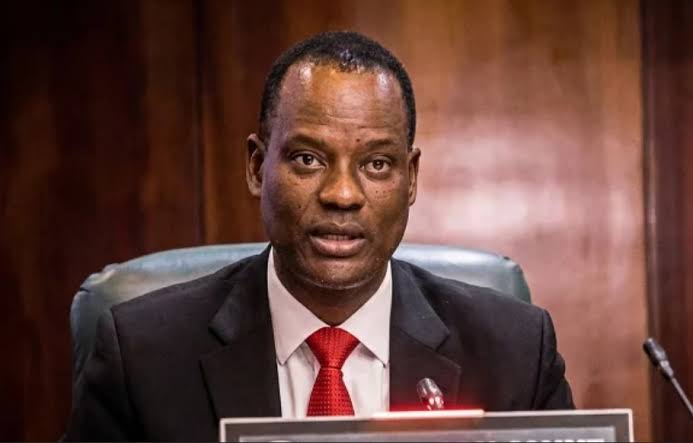
Her comments challenge the Federal Government’s ambition to secure investment-grade status by 2029, a target Finance Minister Taiwo Oyedele outlined as part of a broader strategy to attract foreign capital, improve investor confidence and deepen Nigeria’s financial markets.
The distinction matters. Nigeria has made progress in repairing its economic position, but progress is not the same as having convinced global investors that the country represents a substantially lower credit risk.
The distance between reform and investor confidence
Nigeria currently holds a B rating with a stable outlook from S&P, five notches below the lowest investment-grade rating of BBB-. That position is an improvement on its previous B- rating. In May 2026, S&P upgraded Nigeria for the first time since 2012, recognising improvements in its economic and external position.
The agency pointed to the impact of economic reforms, stronger oil-related prospects and increased domestic refining capacity.
Those improvements followed some of the most consequential policy decisions of President Bola Tinubu’s administration, including the removal of petrol subsidies, foreign exchange market liberalisation and tax reforms intended to expand government revenue.
The reforms have addressed longstanding distortions in Nigeria’s economy. However, their long-term value will depend on whether they translate into stronger public finances, more predictable policies and a greater capacity to meet financial obligations.
That is where the challenge becomes more complicated. A credit rating is not simply a reward for announcing reforms. Rating agencies assess whether governments can sustain those reforms, manage fiscal pressures, maintain external buffers and service their debts through difficult economic conditions.
Nigeria must demonstrate that the improvements are structural rather than temporary before a higher rating becomes sustainable.
A bigger ambition, with more than one hurdle
The government’s credit-rating ambition is also connected to a broader effort to reposition Nigeria in international capital markets.
At the National Capital Market Conference in October, Oyedele said Nigeria was pursuing inclusion in MSCI’s Emerging Markets classification, rather than simply settling for its return to Frontier Market status. He also outlined ambitions to expand the country’s capital market from approximately ₦250 trillion to ₦750 trillion by 2036.
But these ambitions should not be confused with one another. Sovereign credit ratings measure a country's ability and willingness to meet its debt obligations. MSCI classifications assess the accessibility and investability of its equity market. Both matter to international investors, but they measure different things.
For Nigeria, the challenge is therefore not simply to secure a better rating. It is to make the economy more investable. That requires more than higher oil receipts or improved foreign reserves. Investors will be looking for sustained exchange-rate stability, deeper foreign exchange liquidity, predictable economic policies, stronger non-oil revenue collection and a fiscal system less vulnerable to oil-price fluctuations.
Mensah acknowledged the progress made by the Nigerian authorities but urged policymakers to concentrate on improving the country's underlying economic position rather than chasing a particular rating within a fixed timeframe.
Her argument is straightforward: a better rating should be the consequence of a stronger economy, not a target pursued at the expense of the fundamentals.
An investment-grade rating could widen Nigeria's access to international capital, attract institutional investors with restrictions on speculative-grade debt and potentially reduce borrowing costs for the government and businesses. That could translate into cheaper financing for infrastructure, greater investment in productive sectors and improved access to capital for Nigerian companies. But the reverse is also important. If Nigeria prioritises the 2029 deadline over the reforms needed to justify it, the country risks confusing a market signal with actual economic progress. S&P is not saying Nigeria cannot reach investment grade. It is questioning whether the country can close the gap quickly enough. For policymakers, the message should be less about winning a rating upgrade by 2029 and more about building an economy that no longer needs to persuade investors to believe in its numbers.
Source archive dated 14 Nov 2026. This article is not a live update.
Taiwo Oyedele
Request a correction →