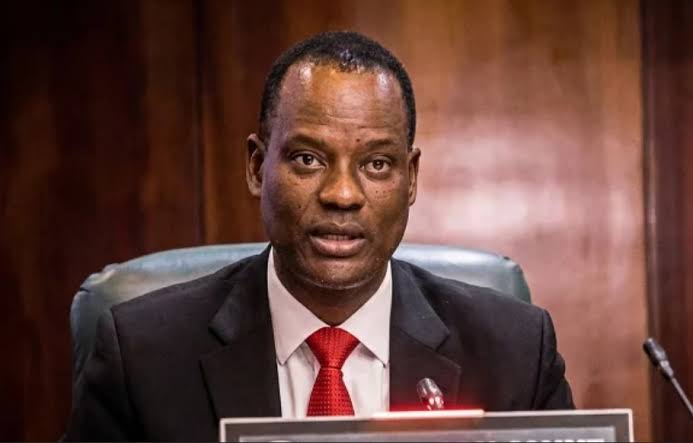

Government Ekpemupolo, better known as Tompolo, is at the centre of fresh questions about ownership and influence at Fidelity Bank Plc, following reports that the Niger Delta businessman has quietly built a substantial stake in the lender.
A column published in a Lagos newspaper on November 8 alleged that Ekpemupolo has become Fidelity Bank's largest shareholder after accumulating shares through market transactions. The claim comes as the bank moves closer to appointing a successor to its Managing Director and Chief Executive Officer, Nneka Onyeali-Ikpe.
The ownership speculation dates back to July 18, 2025, when 1.14 billion Fidelity Bank shares changed hands in nine negotiated transactions on the Nigerian Exchange (NGX). The shares were sold by the Asset Management Corporation of Nigeria (AMCON), according to contemporaneous reports by Nairametrics and other financial publications. The buyer was not publicly identified, although sources cited at the time described the purchaser as a prominent Niger Delta oil and gas security businessman.
The transaction represented approximately 2.29 per cent of Fidelity Bank's then-issued shares. The November column attributed the acquisition to Tompolo and alleged that he has continued buying shares since then, eventually emerging at the top of the bank's shareholder register.
However, the available public records do not independently establish that Ekpemupolo was the buyer or that he is now the bank's largest shareholder. Fidelity Bank's 2025 annual report disclosed that no individual shareholder held up to 5 per cent of its issued share capital at December 31, 2025. Its published shareholding analysis does not identify the beneficial owners of individual positions below that threshold.
The distinction matters. A sizeable minority stake can give an investor a financial interest in a company's direction, but it does not automatically confer control over its board, management or executive appointments. Nor does the July 2025 transaction, by itself, establish the identity of its ultimate beneficiary.
The timing has nevertheless made the allegations more consequential.
Onyeali-Ikpe, who assumed office on January 1, 2021, is approaching the end of her tenure. At Fidelity Bank's 38th Annual General Meeting on October 9, 2026, the board confirmed that the internal phase of its succession process had been completed and that the proposed appointment was undergoing review by the Central Bank of Nigeria (CBN).
The November 8 column alleged that Ekpemupolo wants a say in the choice of the next managing director. It offered no independently verified evidence that he has made such a demand or that the bank's board has ceded any influence to him.
For a publicly listed bank, the distinction between shareholder influence and management control is fundamental. The appointment of a chief executive is a board responsibility, subject to regulatory approval. Shareholders can exercise their rights through established corporate governance channels, but ownership alone does not entitle an investor to select the bank's management.
Tompolo's growing commercial influence is closely associated with Tantita Security Services Nigeria Limited, the pipeline surveillance company he chairs.
Since 2022, Tantita has been among the private contractors engaged in protecting oil infrastructure in the Niger Delta under the federal government's pipeline surveillance arrangements. The business has placed Ekpemupolo in a strategically important position within Nigeria's oil and gas security value chain, where the protection of pipelines has direct implications for crude production, exports and government revenue.
The contracts have also attracted legal challenges. In April 2026, the Federal Capital Territory High Court declined an application to stop the renewal and restructuring of the pipeline surveillance arrangements involving Tantita and other contractors. Justice Bello Kawu warned that halting the operations could create a security vacuum and expose the country to economic losses. The substantive dispute was allowed to proceed.
That commercial footprint provides context for why reports of a potential investment in a major Nigerian bank would attract attention. But business prominence, political connections and financial ownership are three different things. They should not be treated as interchangeable.
Fidelity Bank is a publicly listed financial institution whose leadership decisions affect depositors, investors, employees and the wider financial system. If Tompolo has indeed become its largest shareholder, the size, structure and source of his investment deserve proper disclosure and scrutiny. If he has not, the bank and the market still need clarity to prevent speculation from becoming a substitute for corporate transparency. Ultimately, the real test is not who is rumoured to hold the most shares, but whether Fidelity Bank's board can demonstrate that its next leadership decision is being made in the interests of the institution and its shareholders.
Source archive dated 11 Nov 2026. This article is not a live update.
Tompolo
Request a correction →