
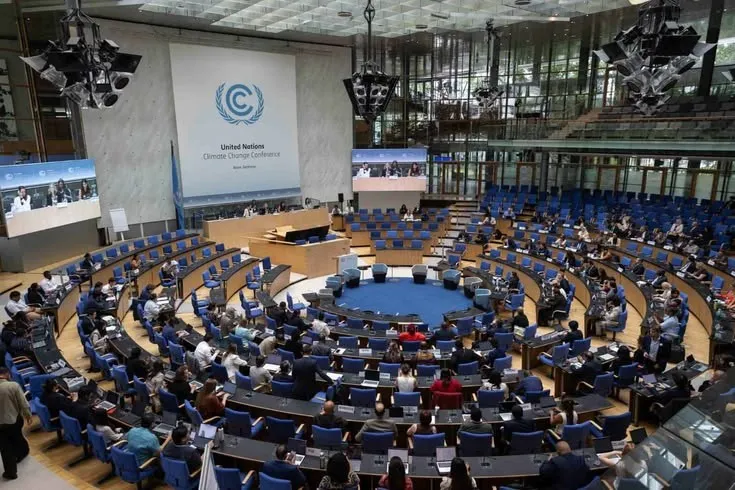
The world's latest attempt to agree on a common response to climate change ended without a deal on Sunday, November 22, after the European Union (EU), Panama and several other countries rejected the proposed final agreement at COP31 in Antalya, Türkiye.
The breakdown followed more than two weeks of negotiations, which extended approximately 48 hours beyond the conference's scheduled November 20 closing date. The prolonged talks made COP31 the longest United Nations climate summit on record, surpassing COP25, which ran overtime in Madrid in 2019.
At the centre of the disagreement was the proposed Antalya Pact, the conference's overarching political agreement. Countries opposing the text argued that it failed to address the central driver of global warming: the continued extraction and burning of fossil fuels.
The rejection exposed a widening divide between governments seeking stronger commitments to move away from coal, oil and gas and countries reluctant to accept language that could accelerate the transition away from fossil-fuel-dependent economies.
Speaking at the closing plenary, Türkiye's COP31 President, Murat Kurum, acknowledged that consensus had not been achieved and said the presidency would not present another version of the text.
"There is nothing to do, we did all that we could," he said, adding that there would be no new text.
Australia's Chris Bowen, who chaired the negotiations under the arrangement between the two countries, described the outcome as disappointing, with disagreements over fossil fuels and climate financing among the principal obstacles.
Ireland's Environment Minister, Darragh O'Brien, speaking on behalf of the EU, said the bloc could not endorse an agreement that failed to mention fossil fuels.
The EU's objection was followed by opposition from Panama, the Marshall Islands, Norway and other countries. The UK and several developing nations also expressed dissatisfaction with the proposed agreement.
The failure to secure consensus is particularly significant because it represents the first breakdown in reaching an overarching climate agreement at a COP since the Copenhagen negotiations in 2009. It does not, however, reverse existing international climate commitments or invalidate agreements reached at previous conferences.
Fossil fuels remain the dividing line
The disagreement over fossil fuels had been building throughout the negotiations.
At COP28 in Dubai in 2023, countries agreed for the first time to include a call for transitioning away from fossil fuels in a final COP decision. The commitment was widely regarded as an important breakthrough, although it did not establish binding national phase-out schedules.
At COP31, several countries wanted that commitment strengthened through clearer language on reducing dependence on coal, oil and gas. However, the final proposed Antalya Pact contained no explicit reference to fossil fuels or a direct commitment to transition away from them.
Saudi Arabia and other oil-producing countries opposed stronger language, reflecting concerns about the economic and energy-security implications of a rapid transition.
The disagreement also extended to the proposed agreement's treatment of carbon-removal technologies, including carbon capture and storage.
The draft placed considerable emphasis on developing technologies capable of capturing carbon dioxide from industrial processes or removing it from the atmosphere. Supporters argue that these technologies could help address emissions from sectors where eliminating fossil fuels is particularly difficult.
However, environmental advocates and several negotiating countries warned that relying too heavily on carbon removal could allow fossil-fuel producers to continue expanding extraction rather than prioritising immediate emissions reductions.
The distinction matters. Carbon removal can complement emissions reductions, but it cannot substitute for the large-scale cuts required to limit global warming.
Climate finance remains unresolved
Beyond fossil fuels, disagreements over financial support exposed another longstanding weakness in international climate cooperation.
The proposed agreement included a commitment to triple adaptation finance, which would increase funding available to developing countries to prepare for climate-related risks such as flooding, drought, extreme heat and coastal erosion.
However, the draft did not clearly establish the baseline against which the increase would be measured, leaving developing countries concerned about how much additional funding would actually become available.
For African economies, this is particularly consequential. Countries across the continent face mounting costs from climate-related disruptions to agriculture, infrastructure, water supplies and energy systems. Yet many lack the fiscal capacity to finance large-scale adaptation programmes without external support.
Climate finance has therefore become more than a diplomatic issue. It directly affects the ability of developing economies to protect infrastructure, sustain agricultural production and avoid diverting scarce public resources from other development priorities.
The disagreement at COP31 reflects a persistent tension in climate negotiations: developing countries are being asked to accelerate their energy transitions while demanding that wealthier economies provide the financing and technological support needed to make that transition economically viable.
A proposed electricity target raises further questions
Another contentious element of the draft was a proposal to increase electricity's share of global final energy consumption to 35% by 2035.
The proposal was intended to accelerate electrification across transport, heating, industry and other sectors, reducing dependence on direct fossil-fuel consumption.
However, expanding electricity use does not automatically reduce emissions. The climate benefits depend largely on how that electricity is generated.
For countries where coal, oil and gas still dominate power generation, electrification without a corresponding expansion of cleaner energy sources could deliver more limited emissions reductions.
Developing countries also face the practical challenge of financing power infrastructure, expanding electricity access and maintaining affordable energy supplies while pursuing decarbonisation.
The proposal therefore raised questions about whether global targets sufficiently account for differences in countries' economic circumstances, energy infrastructure and development needs.
COP31's failure to produce an overarching agreement exposes a growing problem in global climate governance: governments increasingly agree on the urgency of climate action but remain divided over who should bear its economic costs and how quickly the world should move away from fossil fuels. For Africa, the consequences extend beyond diplomatic disappointment. The continent needs substantial investment in renewable energy, electricity infrastructure, climate-resilient agriculture and adaptation. Without predictable financing and access to technology, the transition risks becoming another development burden rather than an opportunity to build more competitive economies. The breakdown also raises questions about the credibility of international climate commitments. The Paris Agreement established a framework for collective action, but its success ultimately depends on countries translating political promises into measurable reductions in emissions and adequate financial support. COP31 has demonstrated that reaching consensus is becoming increasingly difficult. The bigger challenge now is ensuring that disagreements in negotiation rooms do not become another excuse for delaying the investments and decisions needed to protect economies and communities from a worsening climate crisis.
United Nations Climate Change Conference
Request a correction