The road to the 2027 Africa Cup of Nations is beginning to take shape, but for several of Africa's established football nations, qualification is proving less straightforward than expected.
Four rounds of matches have produced six confirmed qualifiers, nine teams with places secured when the three co-hosts are included, and a growing number of competitive groups. Morocco and Mali have emerged as the early pace-setters, winning all four of their matches, while South Africa and Guinea-Bissau have strengthened their positions.
For Nigeria, however, the picture is less comfortable. The Super Eagles remain three points behind Guinea-Bissau in Group L after failing to beat Tanzania in their latest fixture. With only two matches remaining, the margin for error has narrowed.
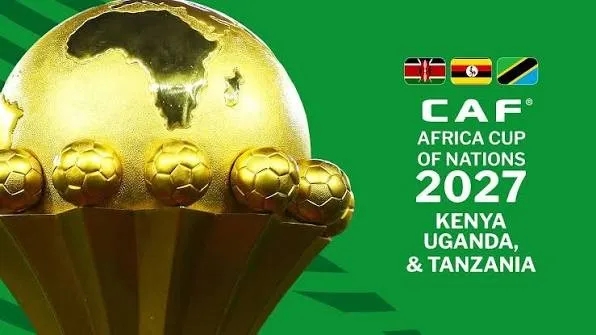
The tournament, officially known as AFCON PAMOJA 2027, will be jointly hosted by Kenya, Tanzania and Uganda from June 19 to July 17, 2027. It will be the first time three countries have organised the continental championship together.
A qualification campaign with more at stake
The qualifying competition began with 12 lower-ranked nations contesting a preliminary round for six places in the main group stage. The successful teams joined 42 others to form a 48-team field, divided into 12 groups of four.
Each team plays its group opponents twice, home and away, across six matchdays. Under the qualification rules, the top two teams in each group ordinarily advance to the 24-team finals. However, because Kenya, Tanzania and Uganda have already qualified automatically as hosts, only the highest-ranked non-host team advances from Groups D, H and L.
That distinction makes the competition particularly demanding for countries in those groups. They are not simply competing for a top-two finish; they must finish ahead of every other non-host team to secure their place.
The first two matchdays, played between September 21 and October 6, produced several early indications of how competitive the campaign could become. Nigeria defeated Madagascar 2–1 in Uyo, but Guinea-Bissau's victory over Tanzania and subsequent 3–0 win against the Super Eagles gave the smaller West African nation an early advantage in Group L.
Other established teams also encountered difficulties. Ghana's campaign began with a defeat to Côte d'Ivoire, while Algeria, Egypt and several other continental heavyweights found themselves in groups where relatively little separated the leading contenders.
November reshaped the race
The November international window brought the third and fourth rounds of matches, with several teams either securing qualification or significantly improving their chances.
Nigeria initially responded positively, defeating Tanzania 3–1 in their November 13 meeting. However, the Super Eagles could not maintain that momentum, drawing 0–0 with the co-hosts in Zanzibar four days later.
Guinea-Bissau capitalised on the opportunity. After drawing 1–1 with Madagascar in their first November encounter, they defeated the same opponents 2–0 in the return fixture. The result took them to 10 points, three ahead of Nigeria.
South Africa also strengthened their position in Group D. After drawing 1–1 with Guinea earlier in the campaign, Bafana Bafana recorded an important 2–1 victory over Kenya in Nairobi. Relebohile Mofokeng scored twice to take South Africa to 10 points, one ahead of Guinea.
Elsewhere, Togo delivered one of the biggest surprises of the qualification campaign by defeating Algeria 3–0 on November 17. The result brought Togo within a point of the group leaders and complicated Algeria's qualification prospects.
Angola also moved ahead of Egypt in Group B after beating South Sudan 1–0, while Côte d'Ivoire maintained their lead in Group C despite being held to a 2–2 draw by The Gambia.
These results underline an important feature of the current campaign: historical reputation is offering little protection against teams that are increasingly organised, competitive and confident against established opponents.
Six countries have already booked their places
Morocco, Mali, Senegal, Benin, Burkina Faso and Cameroon secured qualification after the fourth matchday, joining the three automatically qualified hosts.
Morocco have been particularly impressive. The Atlas Lions defeated Niger twice in November, including a 1–0 victory in their return fixture, to complete a perfect run of four wins and reach 12 points.
Mali have also enjoyed a strong campaign, defeating Rwanda 2–0 in Kigali to confirm their qualification. Senegal secured their place after a 4–2 victory over Sudan, with Mozambique's subsequent 1–0 win against Ethiopia completing the qualification equation.
Benin and Burkina Faso claimed both available places in Group F, while Cameroon's qualification was confirmed after Comoros defeated Congo.
The six countries will now have March's international window to prepare for the tournament rather than compete for qualification.
Where the qualification race stands
Following the fourth matchday, the leading positions in the 12 groups are:
-
Group A: Morocco lead with 12 points and have qualified. Gabon are second with six.
-
Group B: Angola lead with 10 points, followed by Egypt on eight.
-
Group C: Côte d'Ivoire lead with 10 points. The Gambia have seven, while Ghana have six.
-
Group D: South Africa lead with 10 points, followed by Guinea on nine. Only the highest-placed non-host qualifies.
-
Group E: DR Congo lead with 10 points, followed by Zimbabwe on seven.
-
Group F: Benin and Burkina Faso have 10 points each and have both qualified.
-
Group G: Cameroon have qualified with 10 points. Comoros are second with seven.
-
Group H: Libya lead the non-host teams with five points, followed by Botswana on four and Tunisia on three. Uganda have already qualified as hosts.
-
Group I: Algeria lead with seven points, while Togo have six and Zambia five.
-
Group J: Senegal have qualified with 10 points. Mozambique are second with seven.
-
Group K: Mali have secured qualification, with Rwanda currently second on six points.
-
Group L: Guinea-Bissau lead with 10 points, while Nigeria have seven. Tanzania are already qualified as hosts.
The remaining groups are still open, although some teams have a considerably stronger position than others.
March will decide the remaining places
The final two matchdays will take place between March 22 and 30, 2027. By the end of that window, the 24 teams competing in East Africa should be known.
For Nigeria, the task is clear but far from simple. The Super Eagles must overcome their three-point deficit to Guinea-Bissau and secure the only available qualification place in Group L. Their next results will determine whether the country maintains its presence at another continental championship.
Morocco and Mali have already demonstrated what consistency can deliver. South Africa, Guinea-Bissau, Angola, Côte d'Ivoire and other contenders have also given themselves reasons to believe.
AFCON qualification is about more than securing a place at Africa's biggest international football competition. For participating countries, it influences sponsorship opportunities, broadcasting revenue, player visibility, commercial partnerships and the development of domestic football. The 2027 edition carries an additional dimension. By distributing the tournament across Kenya, Tanzania and Uganda, CAF is creating an opportunity for East Africa to attract international attention, strengthen its sports infrastructure and demonstrate its capacity to host major continental events. For African football, the increasingly competitive qualification race is equally significant. Smaller football nations are becoming more difficult to dismiss, while established teams are being forced to earn their places rather than rely on reputation. The next round in March will determine who makes it to East Africa. Until then, Nigeria have work to do, and Guinea-Bissau have a genuine opportunity to make history.
AFCON 2027 logo
Request a correction