Nigeria's startup ecosystem is attracting capital at a pace that few African markets can currently match. But behind the impressive funding numbers is a more difficult question: how many of the country's technology companies can consistently find customers willing to pay for what they build?
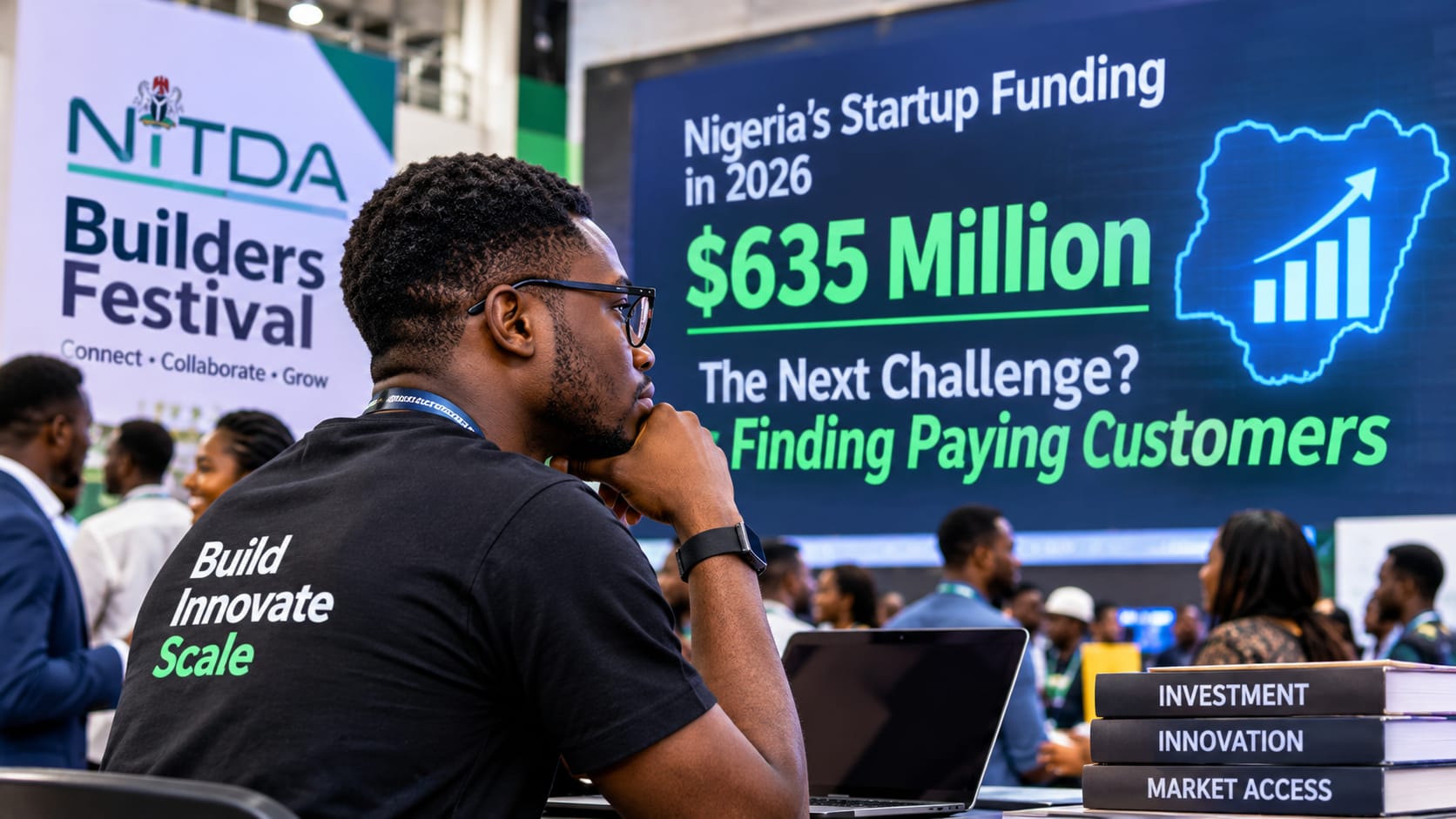
The National Information Technology Development Agency (NITDA) is attempting to address that problem through its Builders Festival, a programme designed to connect Nigerian startups with investors, government institutions and established businesses seeking technology solutions.
The initiative is targeting ₦3 billion in pipeline investments through partnerships and commercial opportunities. At the official exchange rate of ₦1,353.97 per dollar on November 16, the target is approximately $2.2 million.
Organised in partnership with Tech Revolution Africa, the programme culminated in Deal Room sessions at the Digital Nigeria International Conference and Exhibition (DNICE) 2026, held in Abuja from November 10 to 12.
Speaking at the conference on behalf of NITDA Director-General Kashifu Inuwa Abdullahi, the agency's Director of Special Duties, Dr Aristotle Onumo, reiterated the investment target and the programme's ambition to bring Nigerian technology companies closer to institutional customers.
The selection process was competitive. More than 1,388 startups applied, but approximately 30 were selected to participate, according to Abdullahi. That represents a selection rate of roughly 2.2%.
The programme's underlying idea is straightforward: rather than encouraging founders to build products and subsequently search for customers, institutions should first identify operational problems and allow startups to compete to solve them.
NITDA's project office also planned to publish the top 100 corporate challenges, giving founders a clearer understanding of the problems businesses and institutions are willing to address.
Nigeria's funding numbers tell two stories
The initiative comes at a particularly interesting moment for Nigeria's technology ecosystem.
Between January and September 2026, Nigerian startups attracted $635 million in funding, according to Africa: The Big Deal, a tracker monitoring African startup investments. That was 2.6 times the $247 million recorded during the corresponding period in 2025 and Nigeria's strongest performance for the nine-month period since 2022.
Nigeria reclaimed its position as Africa's largest startup funding destination, ahead of Egypt, which attracted $445 million. Kenya recorded $201 million, while South Africa secured $182 million. The country also recorded an increase in the number of funded ventures. Seventy-seven Nigerian startups raised at least $100,000 during the period, compared with 70 a year earlier.
However, the headline funding figure conceals a considerable concentration of capital.
Four companies accounted for approximately $440 million, or 69% of Nigeria's total. Mobility financing company Moove attracted $250 million, Flutterwave was assigned $100 million, e-commerce group Jumia accounted for $50 million, and digital asset infrastructure provider Yellow Card raised $40 million.
One qualification matters: Flutterwave's $100 million figure is the tracker's estimate. The company confirmed a Series E financing round involving Ripple in June but did not disclose the amount.
Excluding these four companies leaves approximately $195 million across the other 73 funded ventures. That translates to an average of about $2.7 million per company, although the actual distribution would have been uneven.
Nigeria's performance is therefore encouraging, but it does not mean capital is reaching the wider startup ecosystem evenly.
A strong Nigerian market in a weaker African funding environment
The continental picture makes Nigeria's performance more significant. African startups raised approximately $2.4 billion between January and October 2026, representing a 12% decline from the corresponding period in 2025, according to Africa: The Big Deal.
More concerning is the declining breadth of investment. Only 343 startups secured funding rounds of at least $100,000 during the first 10 months, down 22% from 438 in the same period last year. This was the lowest January-to-October count since the tracker began monitoring such transactions in 2021.
Nigeria's funding activity has also been volatile. In August, 20 startups raised $364.1 million, largely driven by major transactions involving Moove, Jumia and Yellow Card. September was considerably quieter, with nine startups attracting $11.3 million.
October added another $42 million across nine Nigerian startups, primarily through debt financing in the energy and mobility sectors.
Adding October's figure to the January–September total suggests that Nigeria's funding could have reached approximately $677 million in the first 10 months of the year. This is an arithmetic estimate rather than a separately published cumulative figure from the tracker.
The broader lesson is that a strong funding headline does not necessarily indicate that the average founder is finding it easier to finance a business.
Why NITDA is looking beyond venture capital
This is where the Builders Festival becomes particularly relevant. Venture capital provides companies with money to develop products, hire employees and expand operations. But investment alone cannot establish whether a business has a commercially viable product.
A startup that secures funding but struggles to attract paying customers eventually faces a difficult position, regardless of how much interest investors initially showed.
For Nigerian technology companies, institutional customers could provide an important route to sustainable growth. Banks, manufacturers, government agencies, hospitals and large businesses have operational challenges that technology companies can potentially solve.
A successful pilot can give a startup something more valuable than publicity: evidence that its product works in a real operating environment. If the pilot becomes a paid contract, it also creates revenue, strengthens the company's commercial credentials and potentially opens doors to additional customers.
NITDA's partnership with the Nigerian Association of Chambers of Commerce, Industry, Mines and Agriculture (NACCIMA) is important in this regard. It seeks to bring more established businesses, manufacturers, financial institutions and corporate buyers into the programme.
Government participation alone cannot create a sustainable market for Nigerian technology. Private businesses must also be willing to procure locally developed solutions where they meet their operational requirements.
The real test begins after the Deal Room
There is, however, a distinction between generating investment interest and delivering commercial results. The ₦3 billion remains a target, not confirmed capital already invested in participating startups. Similarly, a memorandum of understanding, an expression of interest or a successful pilot should not automatically be counted as a completed commercial transaction.
The more meaningful indicators will emerge over the coming months: how many startups secure paid contracts, how much institutional procurement follows, and whether participating companies generate repeat business.
NITDA must also demonstrate that the institutions presenting challenges have the budgets, procurement authority and commitment required to purchase solutions.
Without those conditions, the programme risks becoming another innovation showcase where founders meet potential partners but leave without meaningful commercial opportunities.
Nigeria's return to the top of Africa's startup funding rankings is an important achievement, but the concentration of capital in a handful of companies shows why funding alone is an incomplete measure of ecosystem strength. The next phase of Nigeria's technology growth will depend on whether more startups can build businesses around real demand rather than remain dependent on successive investment rounds. That is the more consequential promise of the Builders Festival. If NITDA can turn institutional problems into procurement opportunities, it could help create a stronger domestic market for Nigerian technology. Ultimately, the measure of success will not be how many founders entered the Deal Room or how much investment was announced. It will be how many left with customers, signed contracts and revenue-generating relationships.
AI Generated
Request a correction