
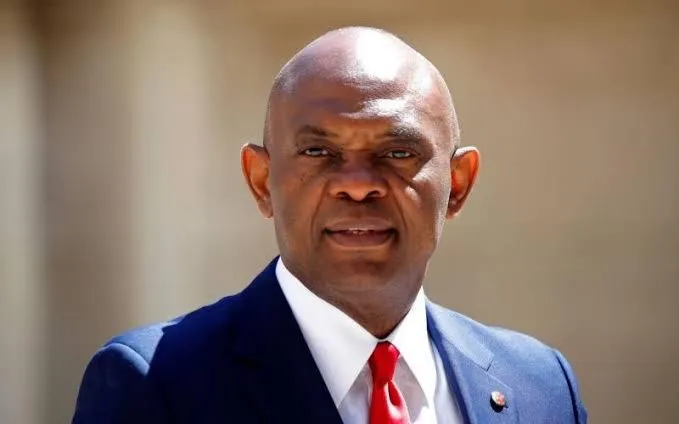
Tony Elumelu is increasing his investment in Seplat Energy at a pace that is becoming difficult for the market to ignore.
Heirs Energies, the energy investment company controlled by the Nigerian billionaire, acquired 5,888,341 additional shares in Seplat on November 16 at £9 per share. The transaction was worth approximately £53 million, or about ₦98 billion, according to the company's regulatory disclosure.
The purchase lifted the combined holding of Heirs Energies and Heirs Holdings, both controlled by Elumelu, to 132,288,341 shares, representing 22.05% of Seplat's issued share capital. It is the second major additional purchase in less than two months. More importantly, it comes just weeks before Elumelu assumes the chairmanship of the London- and Lagos-listed energy company on January 1, 2027.
The distinction between the two purchases is important because reports circulating around the latest transaction have sometimes combined the figures. On September 30, Heirs Energies acquired six million shares at £8.87 each, spending approximately £53.2 million. That transaction raised the group's stake from 20.07% to 21.07%.
The November purchase took it to 22.05%. These are successive ownership positions, not competing estimates of Elumelu's current stake.
Three transactions, one growing investment
Elumelu's growing position in Seplat began with a much larger transaction at the end of 2025. On December 31, 2025, Heirs Energies and Heirs Holdings acquired 120.4 million shares from French oil and gas company Maurel & Prom, representing 20.07% of Seplat. The transaction was valued at approximately $496 million, making Heirs one of the company's most influential shareholders.
The subsequent purchases have steadily increased that position.
Together, the transactions bring the group's holding to approximately 132.3 million shares out of Seplat's 599.9 million issued shares.
The three acquisitions represent an estimated investment of about $636 million, based on the reported transaction values and approximate dollar conversions.
At Seplat's November 20 closing price of ₦15,448.40, the holding was worth approximately ₦2.04 trillion. That is a substantial increase in the market value of an investment that initially cost about $496 million.
However, the distinction between market value and realised profit matters. The increase represents an unrealised gain based on the prevailing share price. It is not cash earned by Elumelu or Heirs, and it would change if Seplat's share price moved.
The price at which Heirs has continued buying also tells a story. Its September purchase was made at £8.87 per share, while the November transaction was executed at £9. The original acquisition from Maurel & Prom was priced at 305 pence, or £3.05, per share.
The newer purchases therefore reflect a considerably higher entry price than the December 2025 transaction.
Why Seplat has become a more valuable investment
Elumelu's increased exposure coincides with a substantial rally in Seplat's shares. The company's Nigerian Exchange share price closed 2025 at approximately ₦5,809. By November 16, it had reached ₦16,241.90, representing a gain of roughly 180% over the period. It subsequently closed at ₦15,448.40 on November 20.
The rally has been supported by stronger financial performance, increased production and improving investor sentiment.
Seplat's 2025 revenue rose 144.2% to $2.73 billion, compared with $1.12 billion in 2024. Profit before tax increased 86.7% to $497.8 million.
A major contributor was the company's acquisition of Mobil Producing Nigeria Unlimited's offshore assets, which expanded its production base and delivered a full year of contribution in 2025.
The operational momentum has continued. In the nine months to September 2026, Seplat reported revenue of $2.76 billion, up 27% from the corresponding period in 2025. Profit after tax rose 174% to $260.2 million, while average working-interest production increased 7% to 144,999 barrels of oil equivalent per day.
These figures provide a more substantive explanation for investor interest than the identity of the buyer alone. There is also a broader market consideration. Nigeria returned to FTSE Russell's Frontier Market classification on September 21, 2026, following improvements in foreign exchange accessibility and the ability of international investors to repatriate capital.
The reclassification could improve the visibility of Nigerian equities among international investors and broaden the potential investment universe. However, it would be difficult to attribute Seplat's share-price rally to that development alone. Company earnings, oil prices, production growth and investor expectations all influence valuation.
The investor behind the growing stake
Elumelu is not a new entrant to Nigeria's corporate landscape. Through Heirs Holdings, he has built a diversified investment portfolio spanning energy, power, financial services, technology, real estate, hospitality and healthcare.
His interests also extend to publicly listed companies, including United Bank for Africa and Transcorp. Seplat, however, has become an increasingly important component of that portfolio.
The investment is strategically significant because energy remains central to Nigeria's economy, export earnings and industrial development. Seplat's position as a major indigenous energy producer gives Elumelu exposure to a sector with substantial long-term opportunities, but also considerable operational, regulatory and commodity-price risks.
His growing stake should therefore be understood as more than a financial investment. It also places him closer to the strategic direction of one of Nigeria's most important energy companies.
A larger shareholder, a new chairman
The next development is the leadership transition. Elumelu joined Seplat's board as a non-executive director in January 2026, following the acquisition of the Maurel & Prom stake. In June, the company announced that he would succeed Udoma Udo Udoma as chairman from January 1, 2027.
Udoma is due to retire on December 31, 2026, after serving as chairman. The executive leadership has also changed. Effiong Okon became chief executive on August 1, succeeding Roger Brown, who retired after 13 years with the company.
This means Seplat is approaching 2027 with a relatively new executive leadership team and a new chairman who is also the ultimate beneficial owner of its largest shareholder group.
That arrangement is not inherently unusual in corporate investment. Major shareholders often seek board representation and a meaningful role in shaping the companies in which they invest. But it makes the relationship between ownership and board oversight particularly important.
A 22.05% holding gives Elumelu substantial influence, but it does not automatically confer control of Seplat. The company has other significant shareholders, and its board remains responsible for acting in the interests of the company and its shareholders as a whole.
The governance question is therefore not simply how much of Seplat Elumelu owns. It is how the board will maintain independent oversight and ensure that the interests of minority shareholders receive appropriate consideration.
What investors should watch out for
Seplat's June 2026 filings showed that its four largest substantial shareholders collectively held 48.10% of the company, while its free float stood at 37%.
The free float represents shares available for trading by public investors. Further acquisitions by Heirs could affect the proportion of shares available in the market, depending on where the shares are sourced. The latest disclosure does not establish how much of the purchase came from the existing free float.
There are also questions about financing. Afreximbank and the Africa Finance Corporation were reported to have supported the original 2025 acquisition. The financing arrangements for the September and November purchases have not been established in the disclosures reviewed.
Investors will also need to monitor Seplat's exposure to oil-price volatility, production disruptions, operating costs and regulatory developments. A rising share price can strengthen the value of an investment, but it does not remove the underlying risks of the energy business.
Further regulatory filings, board appointments and any explanation from Heirs about its longer-term investment strategy will provide useful indications of what comes next.
Elumelu's growing Seplat stake brings together three important developments: the increasing concentration of ownership in a major Nigerian energy company, a leadership transition at board level and the confidence of a significant investor in the company's longer-term prospects. For Seplat, his investment could provide a committed shareholder with the financial capacity and business experience to support its next phase of growth. For minority investors, however, the more important test will be whether that influence strengthens corporate accountability or makes independent oversight more difficult. The distinction matters because a chairman's responsibility extends beyond protecting the interests of the shareholder who owns the largest stake. It extends to the company and all its shareholders. Elumelu has made a substantial financial commitment to Seplat. When he takes the chair in January, the market will be watching to see what that commitment means for the company's governance, strategic direction and long-term value creation.
Tony Elumelu
Request a correction