
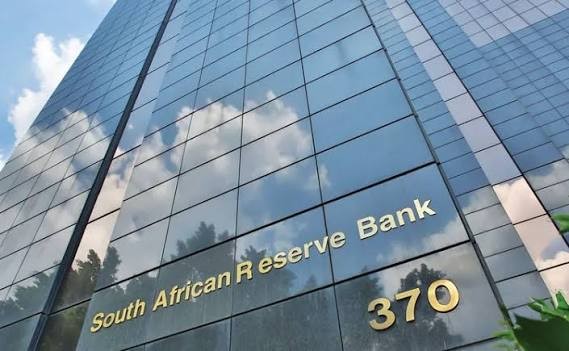
South Africa’s rand has come under renewed pressure, weakening beyond R17 to the US dollar on November 18 and falling further to R17.35 on November 19—its weakest level of the year. The sell-off coincided with the release of October inflation figures and intensified ahead of the South African Reserve Bank’s final monetary policy decision of the year.
Both have now arrived, and neither offers much comfort about the near-term inflation outlook.
Statistics South Africa reported on Wednesday, November 18, that annual consumer price inflation accelerated to 5.2% in October, up from 4.5% in September. The increase was the highest since May 2024, underlining how sharply rising fuel and transport costs are feeding into household expenses.
A day later, on Thursday, November 19, the Reserve Bank kept its benchmark repo rate unchanged at 7.25%. However, the decision was far less comfortable than the headline suggests: four members of the Monetary Policy Committee supported holding rates, while three favoured another 25-basis-point increase.
The rand’s weakness reflects a combination of international market pressures and domestic vulnerabilities. A stronger US dollar has made emerging-market currencies less attractive, particularly as investors reassess the direction of American interest rates and the possibility that borrowing costs will remain elevated for longer.
The South African currency is particularly exposed to shifts in global investor sentiment. Its relatively liquid foreign-exchange market makes it an accessible instrument for investors seeking to increase or reduce exposure to emerging markets. Consequently, the rand can experience sharp movements even when the immediate source of pressure originates outside South Africa.
Market participants also pointed to weaker emerging-market sentiment and domestic political uncertainty as factors behind the currency’s decline. But the dollar’s strength and changing expectations around global interest rates remain central to the broader story.
The domestic inflation picture has made the Reserve Bank’s task more complicated.
October’s 5.2% inflation reading was driven significantly by transport costs, which increased by 15.2% year on year and contributed 2.1 percentage points to headline inflation. Housing and utilities inflation stood at 5.2%, while insurance and financial services recorded an annual increase of 5.3%.
The acceleration reflects the consequences of the energy-price shock that has affected the country since the escalation of conflict in the Middle East. South Africa imports much of its crude oil and refined petroleum requirements, leaving domestic fuel prices vulnerable to movements in international oil markets and the rand-dollar exchange rate.
When the rand weakens, imported fuel becomes more expensive in local currency, even if international oil prices remain unchanged. Higher transport and distribution costs can then spread through the economy, affecting the prices of food, manufactured goods and other everyday essentials.
This creates a difficult policy trade-off. Raising interest rates can help contain inflation expectations and support the currency by making local-currency assets more attractive. But higher borrowing costs also increase the financial burden on households and businesses, potentially weakening consumption and investment.
The Reserve Bank's September decision to increase the policy rate by 25 basis points to 7.25% reflected concerns about precisely these risks. At the time, Governor Lesetja Kganyago pointed to the inflationary consequences of geopolitical disruptions, higher fuel costs and rising global interest rates.
Thursday's decision to hold suggests that policymakers are willing to wait for more evidence before tightening monetary conditions further. But the narrow four-to-three vote reveals that the committee remains divided over how aggressively it should respond to the inflation threat.
Governor Kganyago also made clear that the pause should not be interpreted as a guarantee that rates have peaked. The central bank remains prepared to tighten policy if inflation risks become more entrenched.
For businesses, the uncertainty extends beyond the cost of borrowing. A weaker rand raises the cost of imported machinery, technology, industrial inputs and fuel, complicating financial planning for companies that depend on foreign suppliers. Importers may face pressure on margins, while businesses with dollar-denominated obligations become more expensive to service in local currency.
Exporters, particularly those earning foreign currency, may benefit from a weaker rand because their overseas revenues translate into more local currency. However, those gains can be offset by higher imported input costs and broader economic uncertainty.
The next challenge for the Reserve Bank will be determining whether October's inflation acceleration represents a temporary consequence of higher energy costs or the beginning of a more persistent increase in prices.
That distinction matters. If fuel-price pressures begin to ease and inflation expectations remain contained, policymakers may have room to keep rates steady. If the shock spreads into food prices, wages and other services, the case for further tightening will become harder to dismiss.
South Africa's currency and interest-rate outlook are closely connected to the cost of doing business in its largest industrial economy. A weaker rand makes imported inputs more expensive, while higher interest rates increase the cost of financing expansion, working capital and household spending. The Reserve Bank's narrow decision to hold rates, despite inflation rising to 5.2%, exposes the difficult balance facing policymakers: controlling prices without imposing unnecessary pressure on an already constrained economy. For investors and businesses, the important question is no longer simply whether the rand will recover R17. It is whether South Africa can contain an imported inflation shock without having to pay for it through another round of higher borrowing costs.
South African Reserve Bank
Request a correction