Africa's creative industries are attracting growing international attention, but the continent still faces a difficult question: how much of the money generated by its music, films, fashion and other cultural exports actually stays with the businesses and people creating them?
The African Export-Import Bank (Afreximbank) is committing US$2 billion to support Africa's creative and cultural industries between 2024 and 2027, in an effort to address some of the structural constraints holding back the sector.
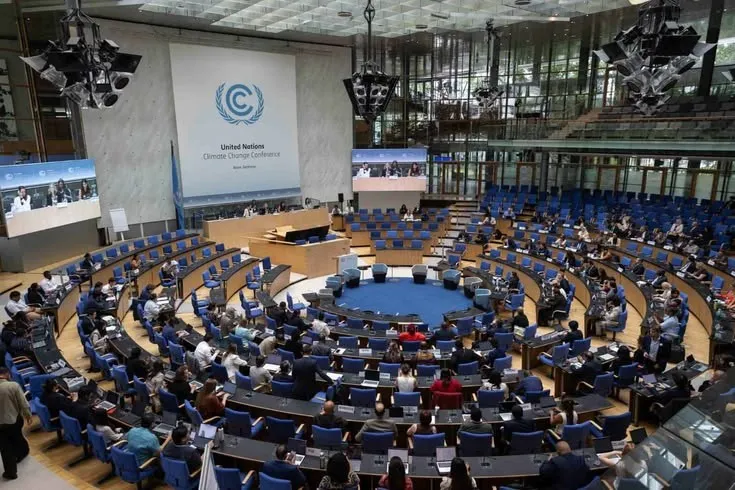
The commitment took centre stage at the 2026 Creative Africa Nexus Weekend (CANEX WKND), held in Lagos from November 5 to 8, where policymakers, investors and industry stakeholders called for stronger financing, intellectual property protection, distribution networks and access to markets.
The size of the commitment is significant. But the bigger question is whether the money will help African creative businesses build lasting commercial value, rather than simply finance more music, films and fashion collections.
A $60 billion industry with a value-capture problem
Africa's creative economy is estimated at approximately US$60 billion, according to figures cited by Afreximbank from the United Nations Economic Commission for Africa (ECA). The ECA has also highlighted the sector's potential to reach US$200 billion by 2030 if the right policies and supporting structures are put in place.
Yet the industry's economic potential is not matched by its ability to capture value. ECA estimates that Africa's creative industries employed about five million people in 2023, while the continent accounted for just one per cent of global creative goods exports.
The gap points to a structural problem. Producing content and finding an audience are only parts of the business. The larger commercial opportunities often lie in distribution, licensing, merchandising, marketing, international sales and ownership of intellectual property.
A Nigerian musician may build a global audience, or a Ghanaian filmmaker may attract international recognition, but popularity alone does not guarantee that the creator controls the rights, distribution arrangements or revenue streams generated by that success.
This is the challenge Afreximbank wants to address. Its intervention is increasingly focused on building the wider ecosystem that allows African creative enterprises to compete commercially and retain more of the value they generate.
The money must reach the businesses
Afreximbank's US$2 billion commitment represents a substantial expansion of its financing ambitions for the sector, up from an initial US$500 million pledge. However, a financing commitment should not be mistaken for money already disbursed. Its economic impact will depend on the facilities developed, the businesses that qualify, the cost of borrowing and how effectively funding reaches enterprises beyond the industry's established players.
Nigeria offered a more immediate example at CANEX WKND 2026. Financing arrangements reported at the event were valued at US$118 million, comprising a US$75 million facility involving Afreximbank and the Development Bank of Nigeria (DBN), a US$30 million arrangement involving Afreximbank and the Nigeria Export-Import Bank (NEXIM), and a reported US$13 million grant involving NEXIM, SMEDAN and Afreximbank.
The components, however, require distinction. The US$75 million DBN facility is intended to expand SME financing, including for creative businesses. NEXIM's US$30 million facility, according to its reported terms, is directed at export-oriented businesses in manufacturing, commodity processing and intra-African trade; it should not automatically be classified as dedicated creative-industry financing. Details of the reported US$13 million grant and its beneficiaries also remain limited.
The distinction matters because announced financing does not automatically translate into accessible capital for independent filmmakers, fashion labels, music entrepreneurs and production companies. Many operate with irregular income, limited collateral and business assets that traditional lenders struggle to value. Their most valuable assets may be music catalogues, film rights, trademarks, designs and future royalty streams rather than property or conventional equipment.
Financing structures must recognise these realities. Otherwise, businesses with viable products and commercial potential may remain excluded from the capital intended to support them.
Intellectual property is where the real money lies
Intellectual property (IP) sits at the centre of the creative economy because it determines who owns, licenses and earns from creative work. Copyrights, trademarks, royalty agreements and licensing arrangements are not simply legal formalities. They determine whether creators can generate income long after a song is released, a film is distributed or a fashion collection reaches the market.
For IP to become a genuine economic asset, however, ownership must be verifiable and enforceable. Creators need accessible registration systems, transparent royalty collection, reliable contract enforcement and affordable mechanisms for resolving disputes.
Without these protections, African businesses risk producing content whose long-term commercial returns are captured elsewhere.
Africa needs a market, not just more content
Distribution presents another obstacle. Even well-financed creative businesses with protected intellectual property cannot grow without access to audiences and paying customers.
The African Continental Free Trade Area (AfCFTA) offers an opportunity to expand cross-border trade in creative goods and services. But that opportunity requires practical implementation, including clearer rules for digital trade, easier cross-border payments and stronger regional distribution partnerships.
Infrastructure is equally important. Recording studios, film production facilities, cinemas, manufacturing centres, reliable electricity and affordable internet all influence the cost and competitiveness of creative businesses.
At CANEX, Nigeria also highlighted its National Intellectual Property Policy and Strategy, approved in 2025, and its Creative Sector Investment Playbook, launched in January 2026, as efforts to improve the investment environment.
From announcements to commercial results
CANEX has demonstrated its ability to attract business interest. Its 2024 edition in Algiers facilitated more than US$540 million in deals, according to Afreximbank.
At the 2026 Lagos gathering, Nigeria's Minister of Industry, Trade and Investment, Jumoke Oduwole, disclosed that proposed transactions worth more than US$500 million were under discussion in deal rooms involving Nigerian businesses, investors and international buyers. Afreximbank also expressed an ambition to generate up to US$1 billion in deals.
These figures represent different stages of commercial activity. Proposed transactions and targets are not completed investments, and the US$540 million recorded in 2024 should not be confused with the 2026 pipeline.
Ultimately, the success of the initiative will depend on how many discussions become signed agreements, funded enterprises, functioning production facilities and sustainable distribution partnerships.
Africa has already demonstrated that its creative products can command global attention. The next economic opportunity is to ensure that the businesses behind that influence own more of the rights, infrastructure and distribution networks through which money is made. Afreximbank's US$2 billion commitment could help accelerate that transition. But the real measure of success will not be how much financing is announced or how many deals are discussed. It will be whether African creators can build profitable businesses, employ more people and retain a greater share of the economic value their creativity generates.
CANEX
Request a correction