For millions of Nigerians, creating content has become more than a pastime. It is a potential career, a marketing business and, for a growing number of young people, an alternative to conventional employment. But the economics of staying in the business are considerably less attractive than the promise of becoming an influencer suggests.
The Nigeria Creator Economy Report 2025 puts the disparity into perspective. It estimates that 56.45% of Nigerian creators earn less than $100 monthly from their work, while just 3.23% make more than $5,000.
The figures expose a difficult reality behind Nigeria's expanding digital culture: building an audience does not automatically translate into earning a living from it.
Developed in collaboration with the Federal Ministry of Art, Culture, Tourism and the Creative Economy, the National Council for Arts and Culture, TM Global and Communiqué, the report attempts to map an industry whose economic contribution has often been discussed in terms of cultural influence rather than measurable earnings.
It estimates Nigeria's creator economy at $31.2 million in 2025. That figure, however, should not be confused with the wider value of the country's creative industries, which include music, film, fashion and other businesses extending beyond independent digital creators.
The distinction matters. Spotify reported that Nigerian artists received more than ₦58 billion in royalties in 2024, equivalent to approximately $38 million at the conversion used in contemporaneous reporting. YouTube AdSense also paid Nigerian creators an estimated $10 million that year, according to the Nigerian report.
These figures demonstrate the commercial potential of Nigerian content, but they do not establish how much individual creators ultimately take home. Spotify royalties, for instance, are distributed through rights holders and contractual arrangements involving artists, labels, publishers and other stakeholders. They are not simply payments into musicians' personal accounts.
The wider African market is considerably larger. The Africa Creator Economy Report 2026, published by Communiqué and TM Global, estimates the sector at $3.08 billion in 2023 and projects it could reach $17.84 billion by 2030. However, the continental estimate covers a broader market and should not be directly compared with Nigeria's $31.2 million figure.
The central question is increasingly not whether African creators can attract attention, but whether they can build businesses around it.
The cost of staying visible
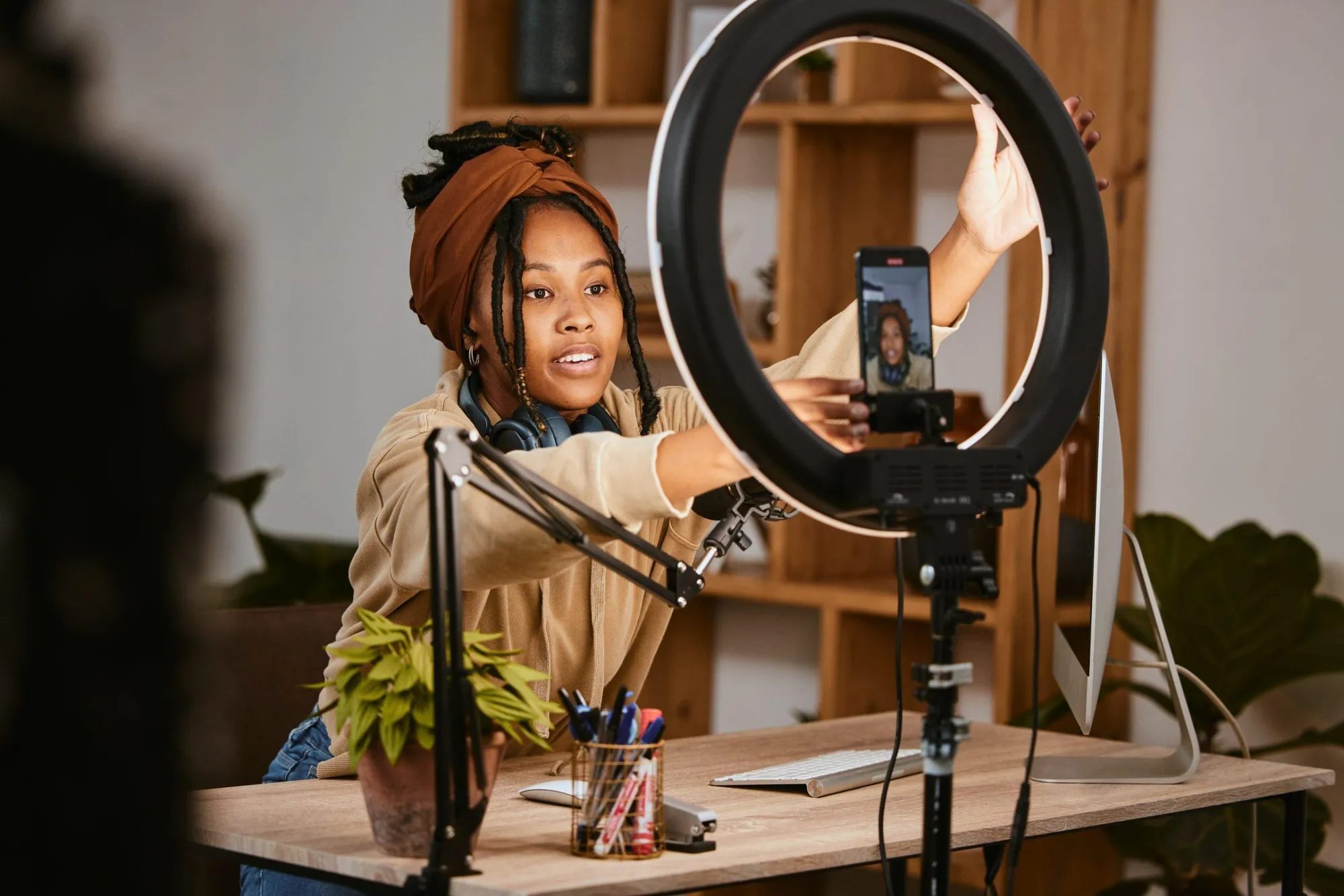
Creating content may require little more than a smartphone and an internet connection at the beginning. Producing consistently, maintaining quality and competing for brand partnerships is another matter.
A October 2025 investigation by Zikoko's Money desk, which interviewed five Nigerian creators, offers a closer look at the expenses behind seemingly effortless social media content.
One Lagos-based lifestyle creator, identified as Esme, said she spends between ₦50,000 and ₦70,000 on food and drinks for each restaurant shoot. With four or five shoots monthly, her spending can reach approximately ₦300,000.
The expenditure is part of the production process. Restaurants, outfits, transportation, makeup and carefully planned experiences become inputs into the content she publishes.
Another creator, Sofia, who produces food content, said she spends approximately ₦50,000 every two weeks on ingredients. She has also invested in props, lighting equipment, tripods and better plates to improve the presentation of her videos.
These are individual experiences, not representative industry averages. But they illustrate an important feature of the business: creators often have to finance production before they know whether a post will generate income.
For some, the investment eventually produces returns. Esme, who has more than 45,000 followers, said brands had begun providing clothing and photography services as her audience grew. She also disclosed signing brand deals worth approximately ₦3 million for six months of content.
Her experience shows how an established audience can reduce production expenses and attract commercial opportunities. It also highlights the gap between creators who have reached that level and those still funding their work from personal savings or other employment.
The infrastructure required to produce content adds another layer of pressure.
Unreliable electricity and poor internet connectivity remain major obstacles across Nigeria's creative industries. The State of Nigeria's Creative Economy 2026 report by NECLive identified power outages and poor internet access as the industry's most significant operational challenges.
For video producers, photographers, podcasters and livestreamers, these are not minor inconveniences. Power interruptions can mean additional spending on generators, fuel and alternative electricity, while expensive or unreliable connectivity affects uploading, distribution and communication with clients.
In an industry where consistency influences audience growth and commercial opportunities, infrastructure failures can become direct business costs.
Where creators actually make money
The challenge is not simply producing content. It is finding reliable ways to monetise it. The Africa Creator Economy Report 2026 offers a broader picture of how creators across the continent earn. Brand partnerships and sponsored content account for 28.3% of respondents' primary income sources, followed by digital products and services at 25%.
Advertising revenue and streaming platform payments each account for just 5.8%.
The findings suggest that brands remain central to the creator economy, while direct payments from platforms contribute relatively little to the earnings of most African creators.
Nigeria's 2025 report similarly identifies Instagram as an important commercial channel, attributing 45% of reported creator income to the platform. This should be understood as a finding from the Nigerian report, rather than evidence that Instagram directly pays creators that proportion of their earnings. Much of the money generated through Instagram comes from sponsored posts, brand collaborations and other commercial arrangements.
This dependence on brand partnerships creates another vulnerability. Creators need audiences that brands consider commercially valuable, but the ability to attract followers does not guarantee that advertisers will pay enough to sustain production.
Platform advertising markets also differ considerably across countries. Advertisers generally spend more to reach consumers in wealthier markets, influencing the revenue available to creators whose audiences are concentrated in lower-income economies.
Some Nigerian YouTubers have responded by producing content for international and diaspora audiences, seeking access to advertising markets with higher potential returns. However, reaching those audiences requires more than simply publishing videos. Language, subject matter, distribution and audience preferences all influence whether content travels beyond its home market.
There is also a growing need to diversify income rather than depend entirely on platform payouts or occasional sponsorships. Digital products, paid communities, merchandise, consulting, subscriptions and direct-to-consumer services offer alternative ways to convert audience relationships into revenue.
The 2026 continental report makes a similar case for treating content creation as a business, rather than relying exclusively on visibility and advertising.
Monetisation is becoming more competitive
Platform rules add another layer of uncertainty. In September 2026, X began rolling out its Original Content Rewards programme, replacing its previous Creator Revenue Sharing arrangement.
Under the new programme, creators must have at least 500 verified followers, generate 500,000 Home Timeline impressions from verified users within 90 days, maintain an eligible Premium subscription and publish original content. They must also meet the platform's other account and location requirements.
Payments are based on qualified impressions from Premium subscribers rather than simply the total number of views a post receives.
The change reinforces a wider problem for smaller creators: platform monetisation increasingly requires a combination of audience scale, consistency, originality and compliance with rules that individual creators do not control.
It also means that a creator can build an audience and generate substantial engagement without necessarily meeting the requirements to earn directly from a platform.
Receiving money from international clients and platforms can present additional complications. Nigerian creators working with foreign brands need accessible payment channels, predictable settlement arrangements and transparent transaction fees.
Although services such as Grey provide foreign-currency accounts and international payment options, receiving money is not always free. Grey, for example, lists fees for several international payment methods, including a 0.8% charge on eligible USD ACH receipts, subject to minimum and maximum fees.
These costs may appear small on individual transactions, but they become more significant when earnings are irregular or production expenses are already consuming a substantial share of revenue.
What needs to change
The Nigeria Creator Economy Report 2025 calls for creators to approach their work more strategically, including adopting AI tools, building business capacity and forming partnerships that reduce production costs and expand distribution.
For policymakers, it recommends incorporating the creator economy into national development strategies, improving creative infrastructure and strengthening intellectual property protection.
These priorities reflect a sector that needs more than programmes celebrating young Nigerian talent. Creators need reliable electricity, affordable broadband, access to production equipment, workable financing arrangements and stronger mechanisms for enforcing their rights.
Intellectual property is particularly important. A creator's work can be copied, redistributed or commercially exploited without adequate compensation. Without effective protection and accessible enforcement mechanisms, building a valuable content business becomes considerably harder.
There is also a case for better industry data. The $31.2 million estimate for Nigeria's creator economy is a starting point, but policymakers and investors need clearer definitions of what the figure includes, how it is calculated and how income is distributed across different categories of creators.
Without that clarity, the industry risks being celebrated for its reach while the financial conditions sustaining its workforce remain poorly understood.
Nigeria has the audience, cultural influence and creative talent to build a substantial digital content industry. But the difference between a thriving creator economy and a large collection of people producing content for little money lies in the infrastructure and commercial systems connecting attention to income. When more than half of creators earn less than $100 monthly, while the costs of equipment, electricity, data and production remain their responsibility, the industry's growth is not necessarily translating into better livelihoods. The opportunity is real, but so is the imbalance. Brands, platforms and audiences benefit from an expanding supply of Nigerian content, while many of the people producing it carry much of the financial risk. The next phase of Nigeria's creator economy should therefore be measured not only by follower counts, viral videos or the size of its projected market, but by how many creators can turn their work into predictable, sustainable businesses. Until that happens, Nigeria may continue exporting its creativity to the world without ensuring that enough of the economic value returns to the people creating it.
Adobe Stock
Request a correction