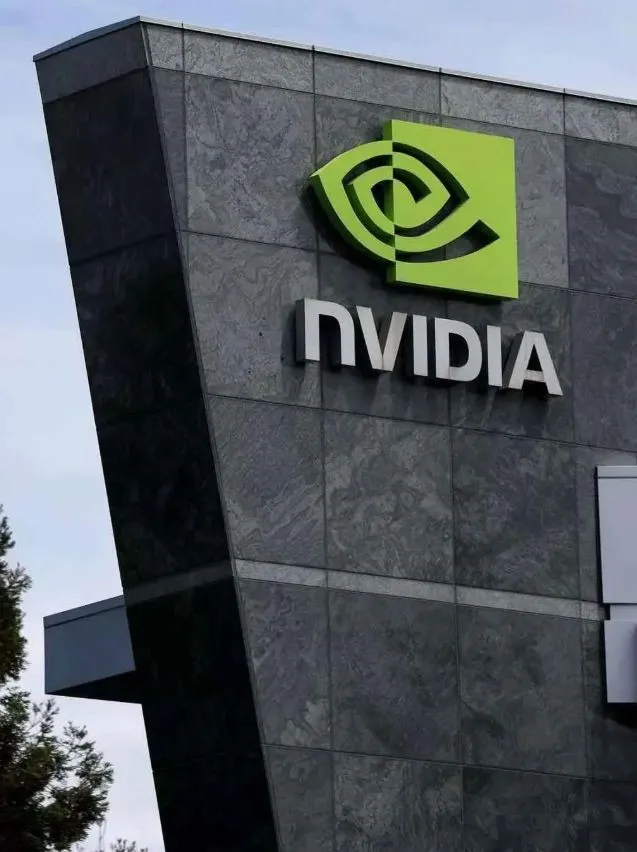
Nvidia shares surged more than 31 per cent on Monday after the chipmaker's board reinstated co-founder Jensen Huang as president and chief executive officer, reversing a decision that had sent shockwaves through the technology industry less than two weeks earlier.
The reinstatement, effective immediately, followed a unanimous board decision announced on November 23. Huang's return ends an extraordinary 11-day leadership upheaval at the company, which sits at the centre of the global artificial intelligence infrastructure boom.
The market reaction was immediate. Nvidia shares jumped approximately 31.5 per cent in premarket trading, adding hundreds of billions of dollars to the company's market value. The rally subsequently helped drive a broader recovery in US technology stocks after a difficult week for investors concerned about the sustainability of the AI investment boom.
For shareholders, Huang's return removes an immediate source of uncertainty. But the circumstances surrounding his departure, and the questions they raise about corporate governance and national security, have not disappeared.
An abrupt departure and an even faster reversal
Huang resigned on November 12 as president, CEO and a member of Nvidia's board, with chief financial officer Colette Kress appointed interim chief executive while the board began searching for a permanent successor.
His departure followed revelations about an extramarital relationship, which Huang personally acknowledged in a message to Nvidia employees on November 8. In the message, he apologised to his wife, family and colleagues, accepted responsibility for his actions and acknowledged that he had fallen short of the standards expected of him as the company's leader.
The controversy also intersected with national security concerns. Reports raised questions about a relationship between Huang and Alice Huang, a Chinese businesswoman suspected by US intelligence officials of having links to China's intelligence services. The two are not related.
-
Related News: https://afrikons.com/article/eleven-days-after-his-exit-jensen-huang-is-back-to-lead-nvidia
However, the allegations require careful distinction from facts. US intelligence sources told CNN that available evidence had not conclusively established that Alice Huang was recruited by Beijing to spy on the Nvidia chief executive.
Nvidia's board announced an independent investigation on November 8, saying it had no reason at the time to believe that US national security or the company's confidential information had been compromised. The investigation remains ongoing.
Washington enters the picture
Huang's return was not simply a corporate succession decision. It unfolded against growing political pressure in Washington, where his leadership is closely associated with America's ambitions to maintain an advantage in artificial intelligence and advanced semiconductor technology.
US President Donald Trump publicly urged Nvidia's board to bring Huang back, describing his return as beneficial to both the company and the United States.
Trump subsequently claimed that he had personally persuaded board members to reverse their position, saying he had spoken with them about Huang's reinstatement. He also maintained that the US government had found no evidence that Huang had engaged in unlawful conduct.
Nvidia's board said it had received input from senior US government officials before reaching its decision. Based on that input and its discussions with Huang, the board concluded that his reinstatement posed no national security risk.
Board chairman Harvey C. Jones said the directors remained convinced that Huang was the right person to lead the company.
"The Board believes Jensen is the right person to lead NVIDIA, and that his reinstatement is in the best interests of our stockholders, employees, partners and customers," Jones said.
Huang described his return as an honour and thanked the board, Kress, Nvidia employees and industry partners for their support during his absence.
Kress will return to her substantive responsibilities as executive vice president and chief financial officer.
Why investors want Huang back
The scale of the market reaction reflects how closely Nvidia's fortunes are tied to Huang's leadership and the global expansion of artificial intelligence.
Since co-founding the company in 1993, Huang has transformed Nvidia from a graphics processor manufacturer into one of the most strategically important companies in the technology industry. Its graphics processing units (GPUs) have become essential infrastructure for training and running advanced AI models, making the company a critical supplier to major cloud providers, technology companies and governments investing in AI capabilities.
Nvidia's latest financial performance illustrates the scale of that position. For its third quarter of fiscal 2027, ended October 25, the company reported revenue of $115.8 billion, representing a 103 per cent increase from the same period a year earlier. Its data centre business, which supplies much of the computing infrastructure behind the AI boom, generated $107.6 billion, up 110 per cent year on year.
The figures underline why investors were reluctant to see the company's leadership disrupted at a time when demand for advanced computing infrastructure remains exceptionally strong.
Huang's return restores continuity at the top of an organisation whose product strategy, relationships with major technology customers and long-term investment roadmap are closely associated with its co-founder.
But the rally should not be mistaken for a resolution of the wider concerns facing the company.
The investigation is not over
Nvidia has made clear that Huang's reinstatement does not bring its internal investigation to an end. The company said the independent committee established to examine the foreign intelligence concerns would continue its work. It has also created a separate National Security and Export Control Committee to oversee trade compliance and related risks.
In addition, Nvidia is beginning a search for a chief compliance officer who will oversee compliance across the company and report to its board's Nominating and Corporate Governance Committee.
These measures suggest that the board is attempting to separate two questions: whether Huang remains the right executive to lead Nvidia and whether the company has adequately addressed the governance and security risks raised by the controversy.
The distinction matters. Nvidia operates at the intersection of commercial technology, US industrial policy and national security. Its chips are not ordinary consumer products; access to advanced semiconductors has become a central issue in the strategic competition between Washington and Beijing.
Restoring Huang's leadership may reassure investors, but it does not remove the need for stronger oversight or resolve outstanding government inquiries.
Nvidia's leadership reversal offers a revealing picture of the relationship between corporate power, financial markets and national security in the AI era. Huang's return demonstrates how much confidence investors place in the executives leading the companies that underpin the global AI economy. It also shows how quickly political considerations can become intertwined with corporate governance when a company's technology is strategically important to national interests. For Africa, where governments, businesses and investors are increasingly looking to build AI capacity, Nvidia's position matters beyond Wall Street. Access to advanced chips, data centre infrastructure and the computing resources required to develop AI systems will influence how quickly African economies can participate in the next phase of technological growth. But the bigger lesson is that the AI economy depends on more than powerful chips and rising valuations. It also requires credible leadership, transparent governance, secure supply chains and institutional accountability. Nvidia has recovered its chief executive. Whether it can fully restore confidence in its governance will depend on what its ongoing investigations reveal.
NVIDIA
Request a correction