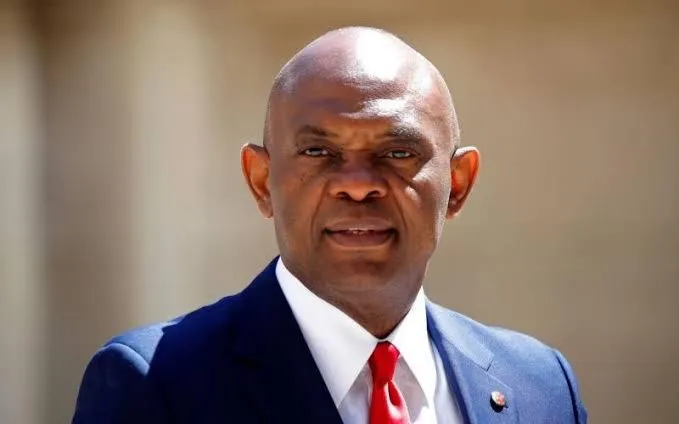
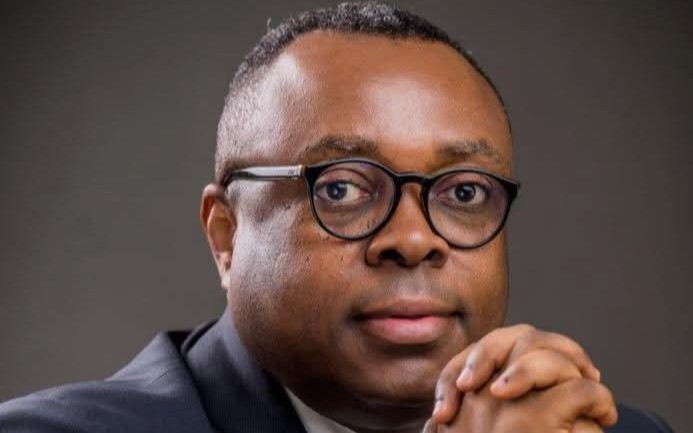
Fidelity Bank Plc has named Stanley Chiedoziem Amuchie as its next Managing Director and Chief Executive Officer, bringing an important leadership transition into focus at one of Nigeria’s largest lenders, following months of speculation about the influence of major shareholders over the bank’s succession process.
Amuchie, currently the bank’s Executive Director and Chief Operations and Information Officer, will assume office on January 1, 2027, succeeding Nneka Onyeali-Ikpe, whose tenure expires on December 31, 2026.
The appointment was announced in a regulatory filing dated November 19, 2026, signed by the bank’s Company Secretary, Ezinwa Unuigboje, and addressed to NGX Regulation Limited and the investing public.
Fidelity Bank confirmed that the Central Bank of Nigeria (CBN) had approved the appointment. The Securities and Exchange Commission (SEC), Nigeria Deposit Insurance Corporation (NDIC) and Financial Reporting Council of Nigeria were also notified.
The appointment settles the immediate question of who will succeed Onyeali-Ikpe. However, it does not independently resolve the separate questions surrounding the bank’s ownership structure and the reported involvement of prominent Niger Delta businessman Government Ekpemupolo, popularly known as Tompolo, in its affairs.
The Tompolo Question and Fidelity Bank's Ownership
Speculation about Tompolo's interest in Fidelity Bank intensified following a substantial off-market share transaction on July 18, 2025.
On that day, 1.14 billion Fidelity Bank shares changed hands through nine negotiated transactions on the Nigerian Exchange (NGX). The transaction involved shares previously held by the Asset Management Corporation of Nigeria (AMCON), according to contemporaneous reporting by Nairametrics.
The buyer was described as a prominent oil and gas security businessman based in the Niger Delta, although the report did not publicly establish the buyer's identity.
The size of the transaction, representing approximately 2.29 per cent of the bank's issued shares at the time, fuelled speculation linking Tompolo to the acquisition.
Subsequent reports suggested that his shareholding had increased and that he had become the bank's largest shareholder. However, these claims have not been independently established through the regulatory announcement confirming Amuchie's appointment.
More importantly, a substantial shareholding does not automatically confer authority over a bank's board appointments or executive succession.
Fidelity Bank's latest announcement provides no indication that its leadership decision was influenced by any particular shareholder. It identifies Amuchie as the board's chosen successor and confirms that the appointment received the necessary regulatory approval.
The distinction matters because ownership, corporate governance and executive management are separate issues, particularly in a publicly listed financial institution whose leadership decisions affect depositors, investors and the wider financial system.
Amuchie Inherits a Bank That Has Grown Significantly
Amuchie will take over from Onyeali-Ikpe after six years in which Fidelity Bank expanded its balance sheet, strengthened its market position and increased its customer base.
Onyeali-Ikpe joined the bank's board in 2015 as Executive Director, Lagos and Southwest Directorate, before becoming Managing Director and CEO on January 1, 2021.
Under her leadership, the bank pursued a strategy focused on digital transformation, operational efficiency, customer experience, innovation and accelerated growth.
According to figures disclosed by Fidelity Bank, profit before tax increased from N28.1 billion in 2020 to N347.7 billion in 2025, representing a five-year compound annual growth rate of 65.4 per cent.
Customer deposits expanded from N1.699 trillion to N6.891 trillion over the same period, while savings deposits increased from N424.4 billion to approximately N1.3 trillion.
Net loans and advances grew from N1.326 trillion to N4.282 trillion, while the number of customer accounts more than doubled, from approximately 5.7 million to over 12 million.
The bank also reported that its share price increased from N2.52 at the end of 2020 to N23 as of November 18, 2026.
These figures reflect a substantial expansion of the bank's franchise. However, the latest audited results also reveal a more complicated picture of its financial performance.
Fidelity Bank's profit before tax declined by 9.7 per cent, from N385.2 billion in 2024 to N347.7 billion in 2025. Profit after tax fell by 12.8 per cent to N242.4 billion.
The bank attributed the moderation in profitability partly to mark-to-market losses on derivative instruments, even as gross earnings increased by 45.6 per cent to N1.52 trillion.
Operating profit also declined by 16.4 per cent, while the cost-to-income ratio increased from 42.9 per cent to 54.6 per cent.
The figures suggest that the next phase of growth will require more than expanding deposits and attracting customers. Amuchie will need to strengthen earnings quality, manage operating costs and translate the bank's larger balance sheet into sustainable profitability.
Capital Raising and International Expansion
Another defining feature of Onyeali-Ikpe's tenure was the bank's capital-raising programme, which became particularly important following the CBN's March 2024 recapitalisation directive.
The new requirements raised the minimum capital threshold for commercial banks with international authorisation to N500 billion, placing additional pressure on lenders to strengthen their capital bases.
Fidelity Bank responded with a combined public offer and rights issue in 2024, raising N175.85 billion.
The bank subsequently undertook a private placement in 2025 to further strengthen its capital position.
Its other funding milestones included a N41.213 billion, 10-year subordinated bond issued in January 2021 at a coupon of 8.5 per cent, and a $400 million Eurobond issued in October 2021 at 7.625 per cent.
The Eurobond was fully redeemed at maturity in October 2026, according to the bank.
Amuchie was involved in several of these transactions, including the bank's capital-raising initiatives and its international expansion.
One of the most significant developments was Fidelity Bank's acquisition of Union Bank UK, which became its first international banking subsidiary and now operates as FidBank UK Limited.
The acquisition gave the Nigerian lender a presence in the United Kingdom, strengthening its ability to serve customers and businesses operating across both markets.
Who Is Stanley Amuchie?
Amuchie brings more than 30 years of experience across banking, financial management, technology, corporate governance and business advisory.
He began his professional career at Arthur Andersen (now KPMG Professional Services) in September 1995, where he worked until February 2000, before joining Zenith Bank Plc.
During more than 18 years at Zenith Bank, he held several senior management positions, rising to Group Chief Financial Officer in July 2015 and Group Zonal Head in June 2018. He left the institution in October 2018.
Between April 2019 and February 2021, he served as Chief Technical Consultant at Mint Financial Technologies Limited, the operator of the digital banking business now known as Mintyn Bank.
He joined Fidelity Bank as Chief Technical Consultant in March 2021 and was appointed Executive Director, Chief Operations and Information Officer, in January 2022.
In that capacity, he provided strategic direction across the bank's operations and information technology functions while contributing to its international expansion programme.
His responsibilities have included operational efficiency, technology transformation, regulatory oversight, financial management and the development of the bank's international business.
Academically, Amuchie holds a first-class Bachelor of Science degree in Industrial Chemistry from the University of Benin and a Master of Science degree in Corporate Governance from Leeds Metropolitan University, now Leeds Beckett University, in the United Kingdom.
He is pursuing a PhD in Management of Technology and Innovation at the University of Nigeria, Nsukka.
He is also a Fellow of the Institute of Chartered Accountants of Nigeria and an Honorary Senior Member of the Chartered Institute of Bankers of Nigeria. His executive education includes programmes at INSEAD, Harvard Business School, the Wharton School and Lagos Business School.
Fidelity Bank's leadership transition comes at a critical moment for Nigeria's banking industry. The recapitalisation exercise has pushed lenders to strengthen their financial foundations, but raising capital is only the beginning. Banks must now demonstrate that their expanded capital bases can support stronger lending, more efficient operations, sustainable earnings and greater competitiveness. Amuchie's appointment offers continuity. Having worked within Fidelity Bank's executive management for several years, he understands the institution's operations, technology infrastructure, capital-raising history and international ambitions. But continuity also brings accountability. Investors will be watching whether he can reverse the recent moderation in profitability, improve operational efficiency and extract greater value from the bank's expansion into the United Kingdom. For Fidelity Bank, the next leadership chapter will ultimately be judged not by how much larger the institution becomes, but by how effectively it converts that growth into lasting value for shareholders, customers and the wider Nigerian economy.
Stanley Amuchie
Request a correction