
The African Development Bank Group (AfDB) has approved a $102 million financing package for Sterling Bank Nigeria Limited, in a move aimed at expanding access to capital for small and medium-sized enterprises (SMEs), women and youth entrepreneurs, and vulnerable farming communities across Nigeria.
The financing is expected to support at least 200 businesses, help create up to 6,000 jobs and reach more than 5,000 smallholder farmers and agricultural SMEs. It will also provide funding for sustainable investments and help businesses access trade finance to participate in regional and international markets.
Announced on 17 November 2026, the package brings together four financing instruments designed to address different constraints within Nigeria's private sector. Rather than relying on a single lending facility, the AfDB is combining long-term business credit, sustainable financing, concessional agricultural lending and trade guarantees.
The intervention comes against a backdrop of persistent financing challenges for Nigerian businesses, particularly smaller enterprises that struggle to secure affordable, long-term capital to expand operations, invest in equipment and navigate increasingly expensive operating conditions.
Four financing instruments, different priorities
The largest component is a $50 million line of credit that will enable Sterling Bank to provide competitively priced, longer-term financing to businesses operating in priority sectors, including healthcare, education, agriculture, renewable energy and transportation.
A minimum of 30 per cent of the facility, equivalent to $15 million, will be allocated to eligible women-owned, women-led and youth-owned enterprises. The allocation is intended to improve access to financing for entrepreneurs who often face additional barriers when seeking capital to grow their businesses.
A further $20 million sustainable loan will support qualifying green and social projects under Sterling Bank's Sustainable Financing Framework. This component is designed to direct capital towards investments that deliver environmental or social benefits while expanding the country's sustainable finance market.
The package also includes a $2 million concessional loan under the AfDB's Agri-Food SME Catalytic Financing Mechanism (ACFM). The facility will support smallholder farmers and agricultural SMEs, particularly those operating in vulnerable communities.
The fourth component is a $30 million Trade Finance Transaction Guarantee, which is expected to facilitate up to $150 million in trade transactions.
The guarantee is designed to help Sterling Bank manage risks associated with trade financing, making it easier for Nigerian businesses to access the financial support required to import essential inputs, fulfil commercial contracts and expand into regional and international markets.
Importantly, the guarantee is not another $30 million pool of direct business loans. Its value lies in the additional trade transactions it can help facilitate.
Farmers in vulnerable communities are also in focus
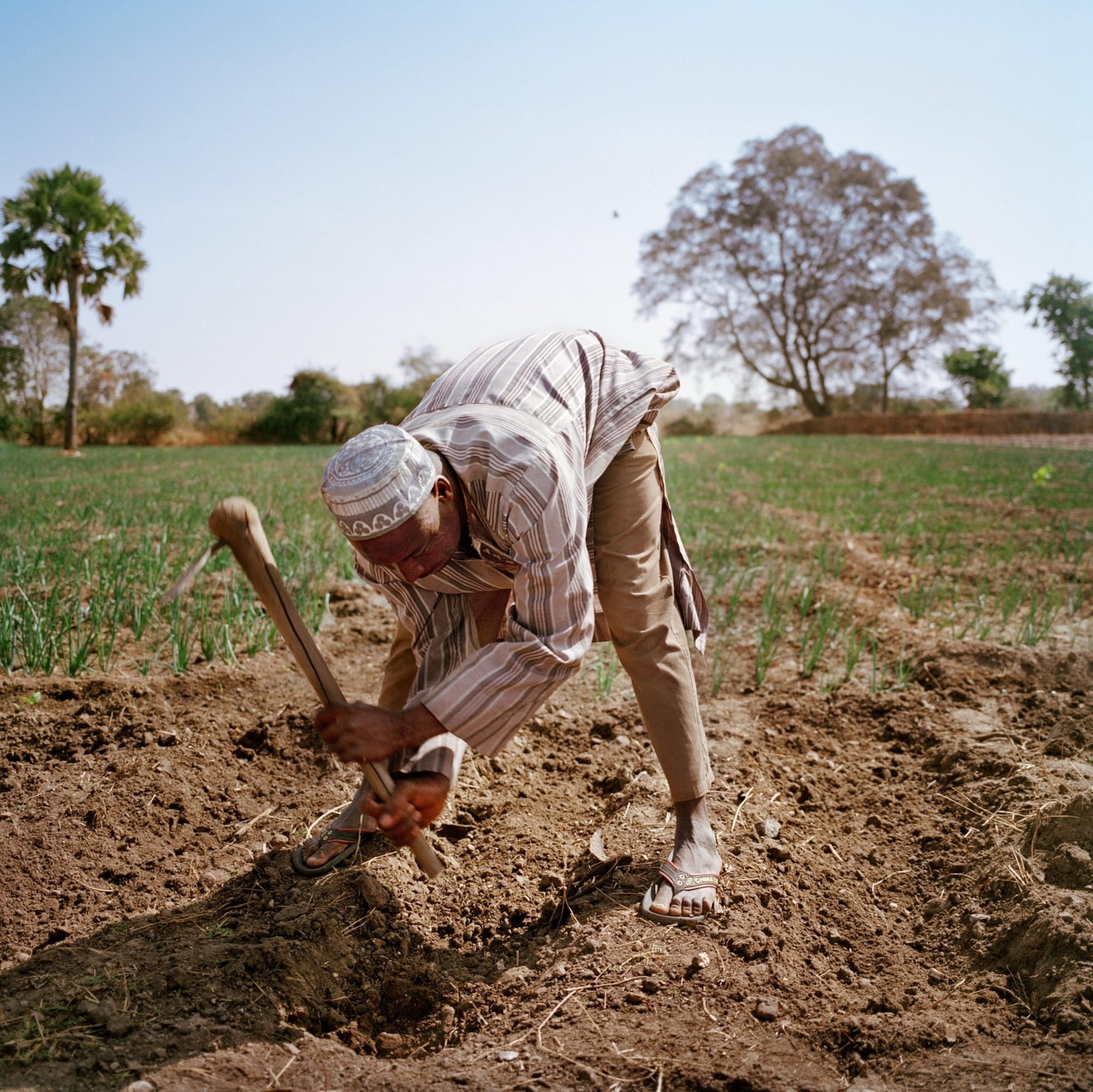
One of the more targeted aspects of the package is its support for agricultural communities affected by displacement, insecurity and climate-related shocks. Through Sterling Bank's Affordable Microlending Programme (STAMP), implemented in collaboration with the Office of the United Nations High Commissioner for Refugees (UNHCR), the agricultural financing is expected to reach more than 5,000 smallholder farmers and agricultural SMEs.
The intervention is intended to help beneficiaries rebuild livelihoods, sustain agricultural production and strengthen their ability to withstand economic and environmental disruptions. This is particularly relevant for communities where insecurity and displacement have disrupted farming activities, weakened household incomes and made access to conventional banking services more difficult.
By extending financing to these groups, the programme seeks to address a challenge that goes beyond access to credit: the ability of vulnerable farming households and agricultural businesses to remain economically active despite persistent disruptions.
AfDB and Sterling Bank outline their objectives
AfDB Acting Vice-President for Regional Development, Integration and Business Delivery and Director-General for Nigeria, Dr Abdul Kamara, said the financing recognises that businesses face different challenges and require solutions tailored to their individual needs.
He explained that combining support for SMEs, women and youth entrepreneurs, vulnerable farming communities, sustainable investments and trade would help more Nigerian businesses access the capital needed to expand, create employment and contribute to economic development.
Sterling Bank Managing Director and Chief Executive Officer, Abubakar Suleiman, said the partnership would strengthen the bank's ability to address financing gaps affecting SMEs, women entrepreneurs, young business owners and underserved communities.
The approval also builds on AfDB's broader financing commitments to Nigeria's enterprise and industrial sectors in 2026.
In May, the development bank approved a $61 million financing package for the Development Bank of Nigeria to expand access to affordable credit for women-owned and women-led businesses, particularly in agriculture and other productive sectors.
It also approved a $200 million financing facility for the Bank of Industry to provide medium- and long-term funding to enterprises in sectors including infrastructure, agro-food processing, healthcare, pharmaceuticals and green industrialisation.
Together, the three approvals represent $363 million in financing commitments through Nigerian financial institutions, although the facilities have different structures, beneficiaries and development objectives.
Access to finance remains the real test
The latest approval adds another source of development financing to Nigeria's financial ecosystem, but the announcement is only the beginning of the process. The effectiveness of the package will depend on how Sterling Bank translates the facilities into accessible financing for businesses that need it. The bank's lending criteria, interest rates, collateral requirements, repayment terms and application processes will ultimately determine which enterprises benefit.
For smaller businesses, the availability of funding does not automatically mean access to it. Enterprises without sufficient financial records, acceptable collateral or established banking relationships may still struggle to qualify, even when development finance is directed towards their sectors.
The same concern applies to the agricultural component. Reaching more than 5,000 farmers will require effective identification of beneficiaries and financing arrangements that reflect the realities of smallholder agriculture, where incomes are often seasonal and exposure to climate and security risks remains high.
AfDB's announcement did not provide a public application deadline or a dedicated application portal for prospective beneficiaries. Businesses and farmers interested in the programme will therefore need to follow Sterling Bank's official communications for further details on eligibility and access.
Nigeria does not only need more money flowing into its private sector; it needs financing that reaches productive businesses on terms they can sustain. The AfDB package is significant because it recognises that the financing needs of a manufacturer, a renewable energy developer, an agricultural cooperative and an exporting business are not the same. By combining long-term credit with agricultural lending, sustainable finance and trade guarantees, the intervention addresses several parts of the business financing chain. But the more important measure of success will not be the $102 million approval itself. It will be whether smaller businesses can secure the funding, expand production, employ more people and participate in markets that were previously beyond their reach. For Sterling Bank, the partnership also presents an opportunity to deepen its role in financing Nigeria's productive economy. For the AfDB, it is another test of whether development finance can move beyond institutional approvals and deliver measurable economic opportunities on the ground.
A farmer tilling a farm. Credit: Jason Andrew | National Geographic
Request a correction